

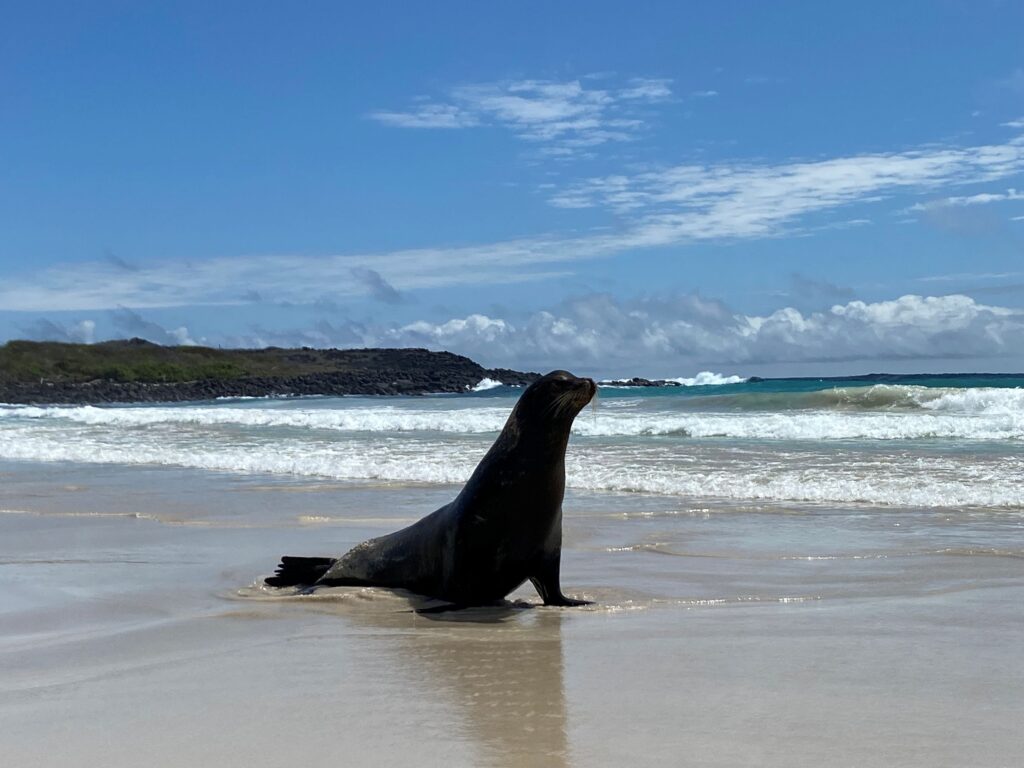
This is the final post in the Ecuador posts series. After our 5-day Amazon trip, we were back in Quito for two nights and then flew to San Cristobal to start our 10-day trip to the Galapagos Islands.
A lot of people (especially on TripAdvisor forums) prefer to visit the Galapagos Islands on a cruise. It is convenient, and you can see some of the remote islands that are only accessible by cruise ships. We checked out some cruise packages, but in the end decided to do a 10-day land-based tour and plan our own trip across San Cristobal, Santa Cruz and Isabela Islands. Happy Gringo and this blog post was helpful in our planning.
For Galapagos, visitors need to get Ingala Transit Control Card (TCT) and pay National Park Fees ($200 per adult, $100 for < 12 year old in 2025). You can read more about this card and fees here. I had filled out the Ingala TCT form online, and on our flight back from Amazon, we stopped by the office at the airport to pick up our Ingala TCT cards.
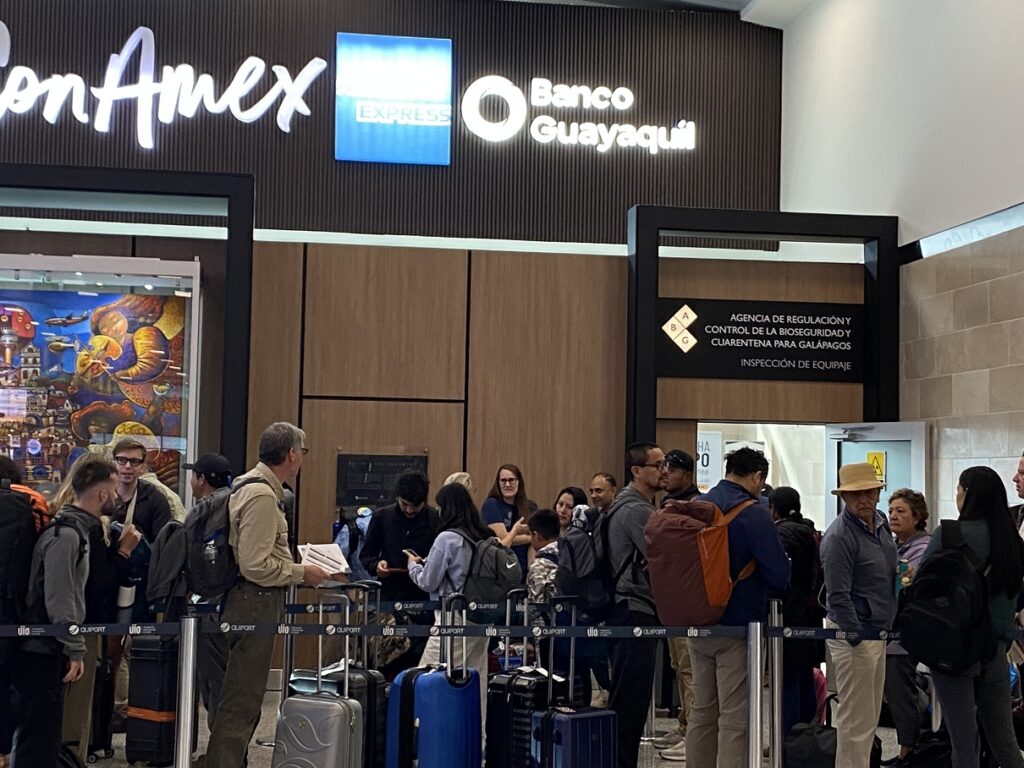
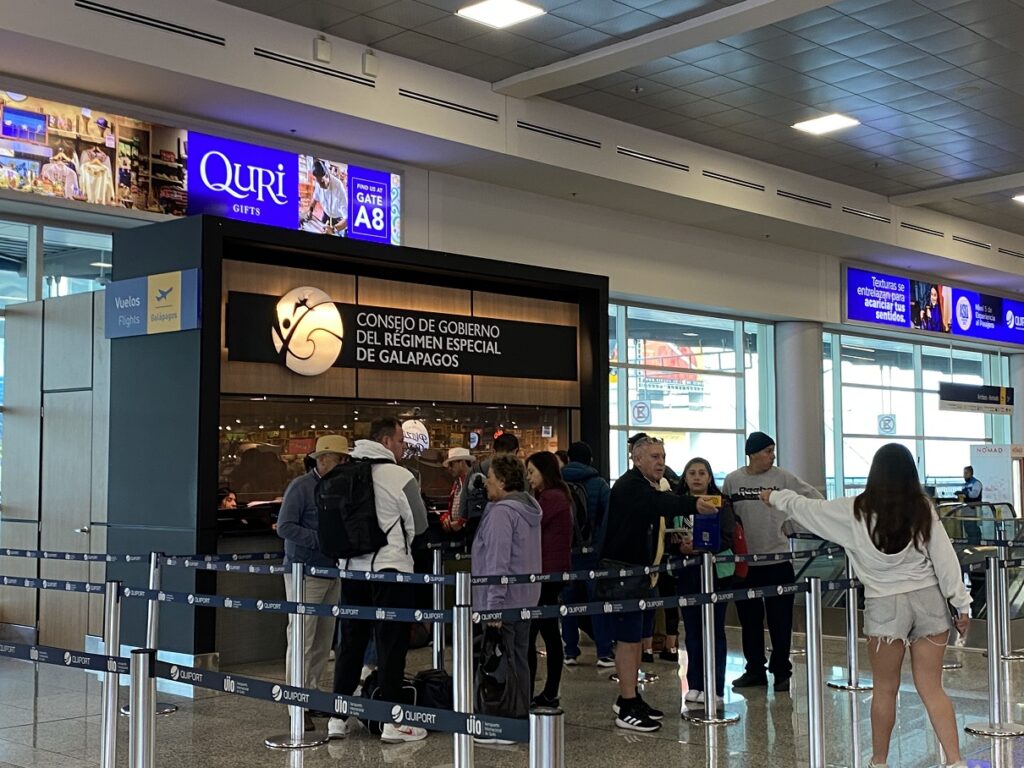
Two days later, when we returned to the airport for our flight to San Cristobal, I was glad we had picked up our TCT cards earlier, as there was a lineup at the counter. Visitors must obtain these cards before proceeding to the special baggage check for the Galapagos. There was a lineup for baggage check as well, and it took us about 30 minutes or so to get through.
Upon our arrival in San Cristobal, we paid the National Park Fees and underwent one more round of baggage checks. This time, with a sniffer dog looking for any fruits, seeds or other products that could pose a biosecurity risk to the islands.
San Cristobal (Puerto Baquerizo Moreno)
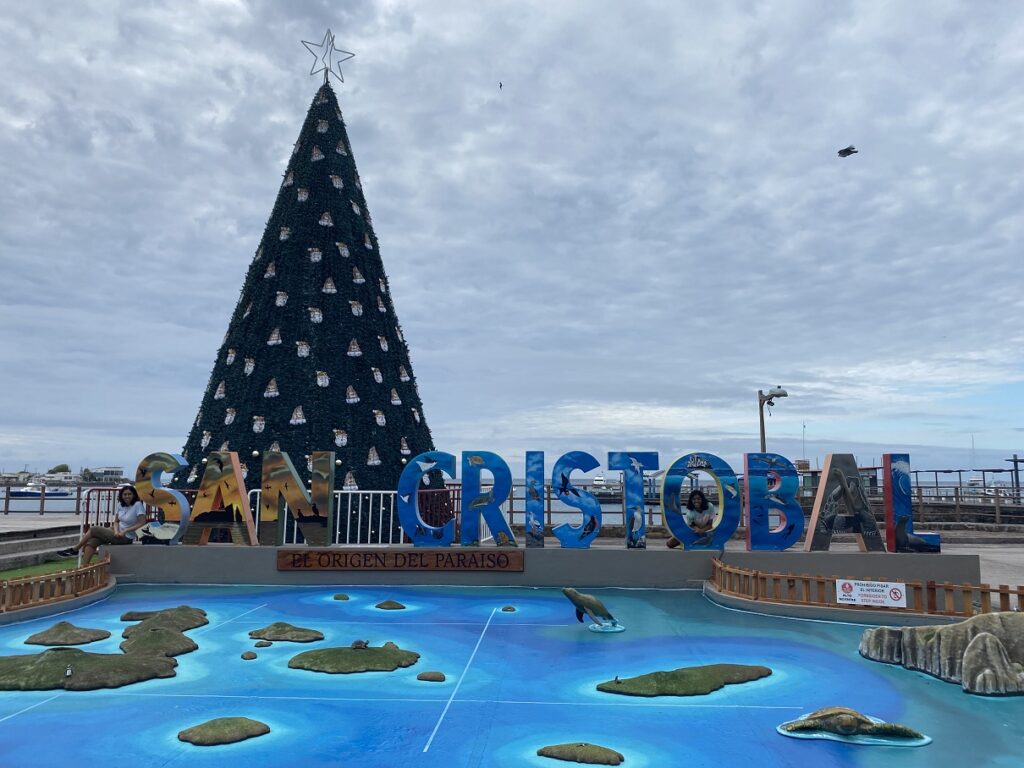
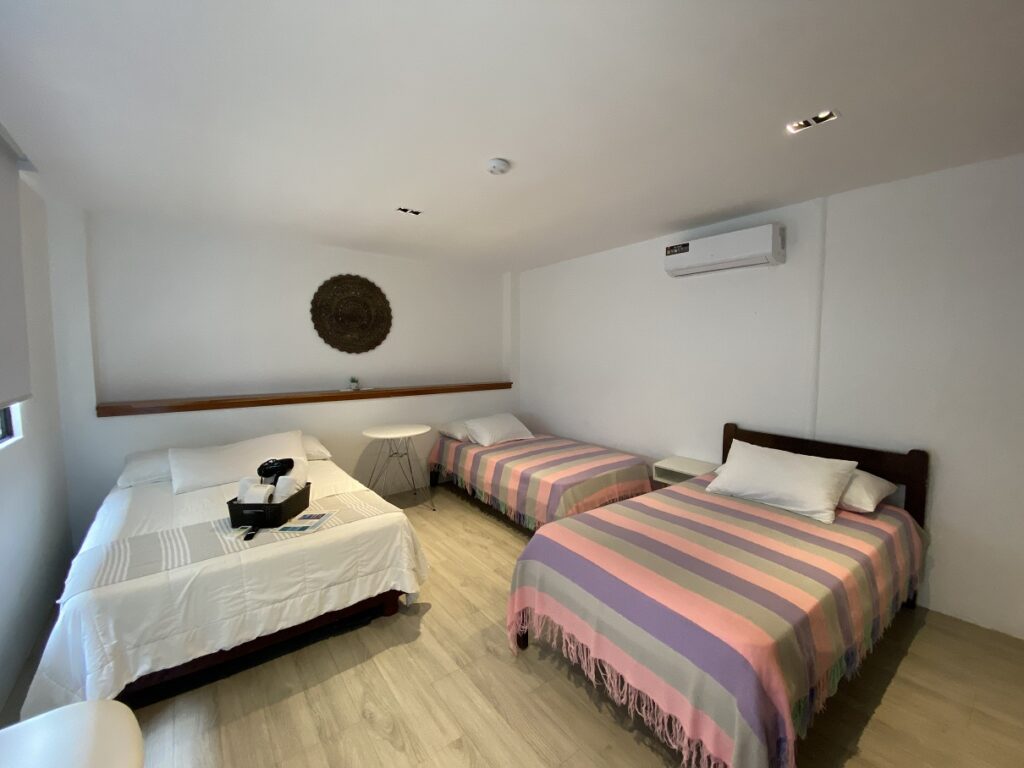
From the airport, it was a short taxi ride to the Cactus Hostal, where we had booked our three-night stay. It was a family-run hostel, with a few rooms and a common/dining area.
Our hostel was a couple of blocks from the main street with all the restaurants, cafes, a small beach (Playa de Oro) and the main dock. Later in the evening, we went down to the main street for a walk and had our first view of the sea lions. Sea Lions that I have been reading about in the blogs that just relax on the dock benches, stairs, boardwalk or on the beach.
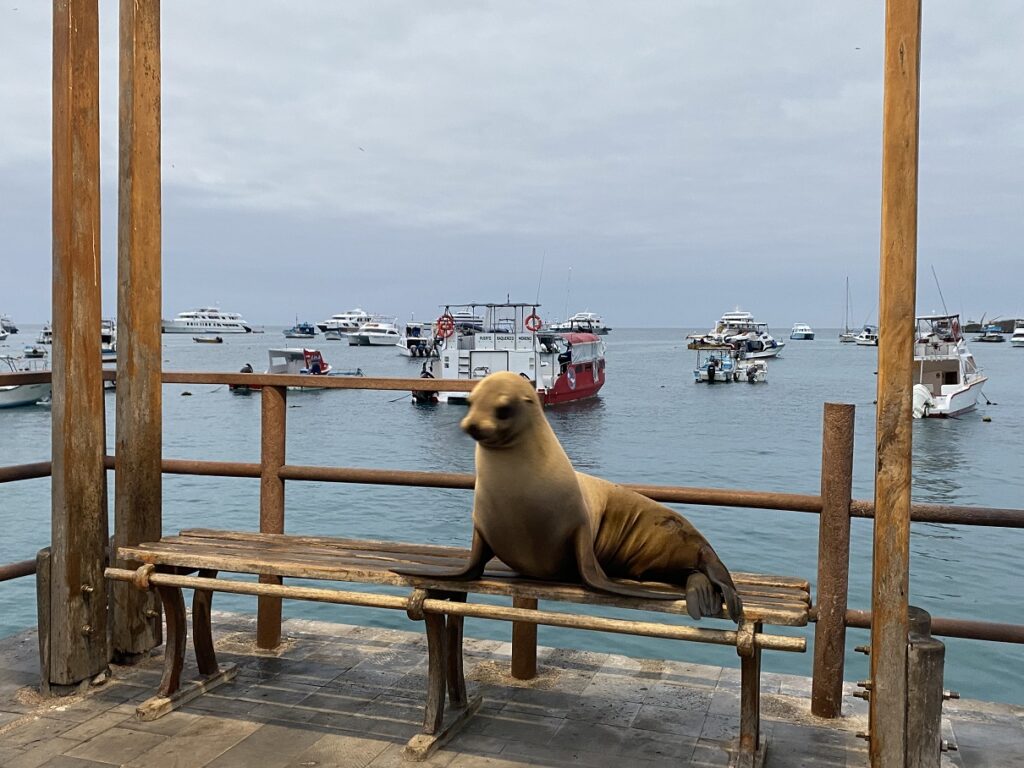
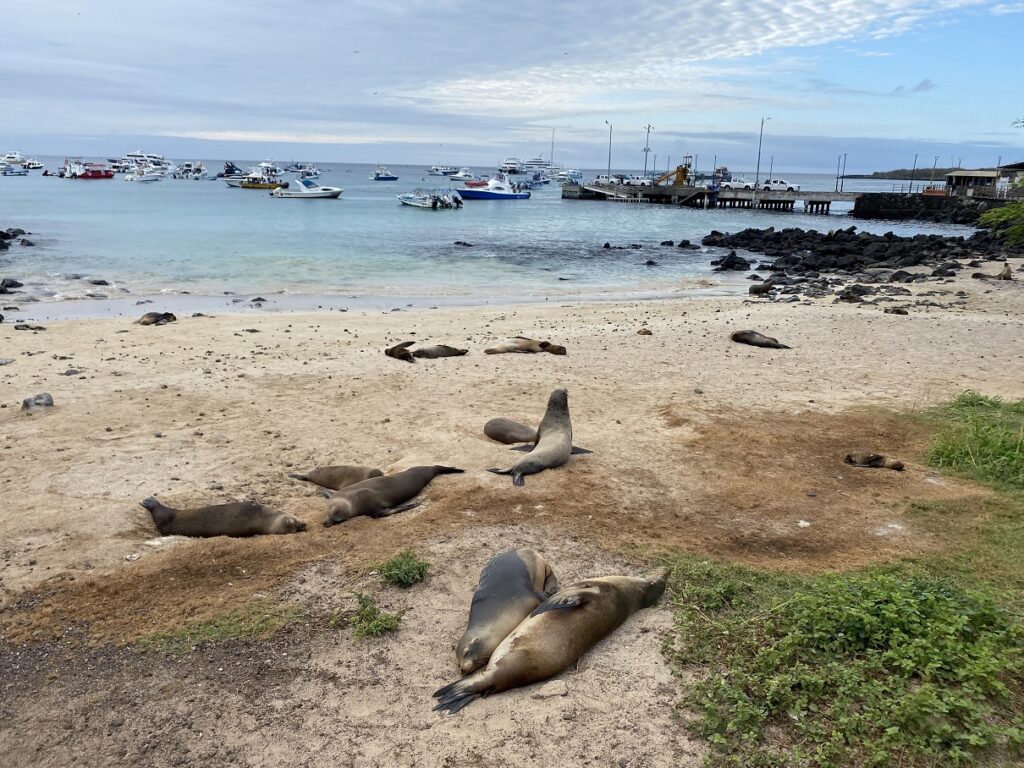
There were so many of them. Big ones and some babies, too, grunting, growling and barking. We continued our walk and then settled on a restaurant for the night, where we ordered some Pizza.
La Galapaguera
The next day, we booked a taxi for a four- to five-hour trip to La Galapaguera, Puerto Chino Beach, and El Junco. After breakfast at the hostel, we were on our way and made our first stop at the La Galapaguera – a breeding centre for the island’s giant tortoises.
Right at the entrance, a giant tortoise was munching on a leaf. Lunch or still finishing breakfast? or still enjoying dinner from last night? All tortoises are numbered, and I don’t remember exactly, but there were more than 50 just in this centre.
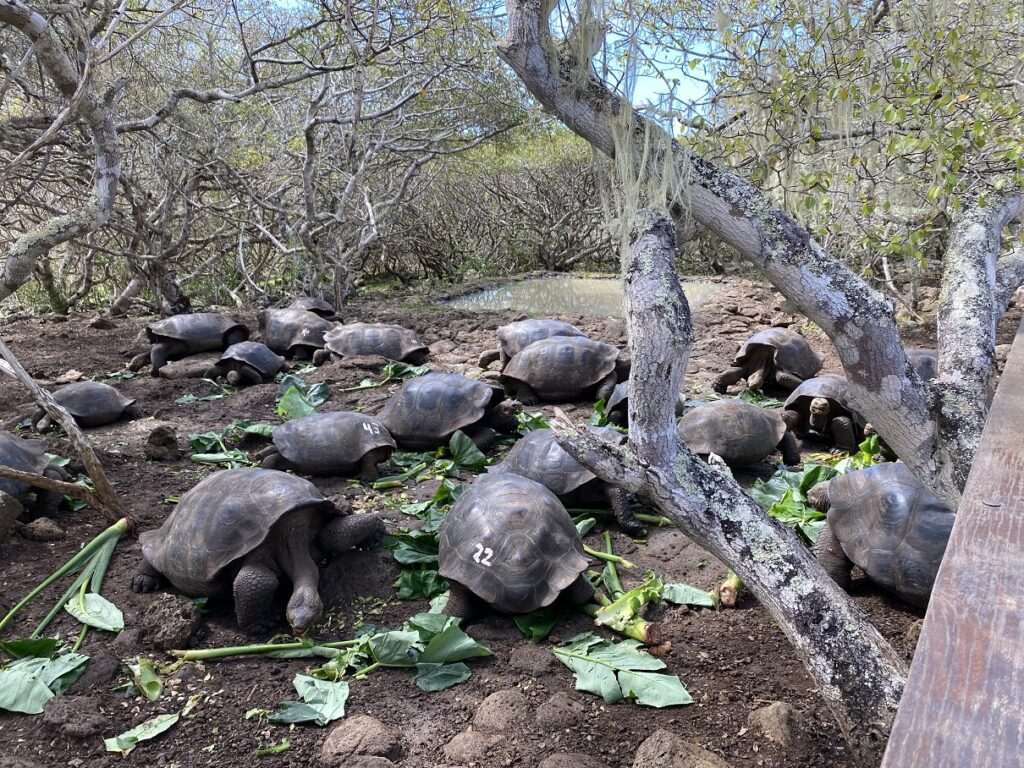
A short trail weaves through the habitat and provides a unique opportunity to see these giants. There was also a dedicated area where the staff cared for the young ones.
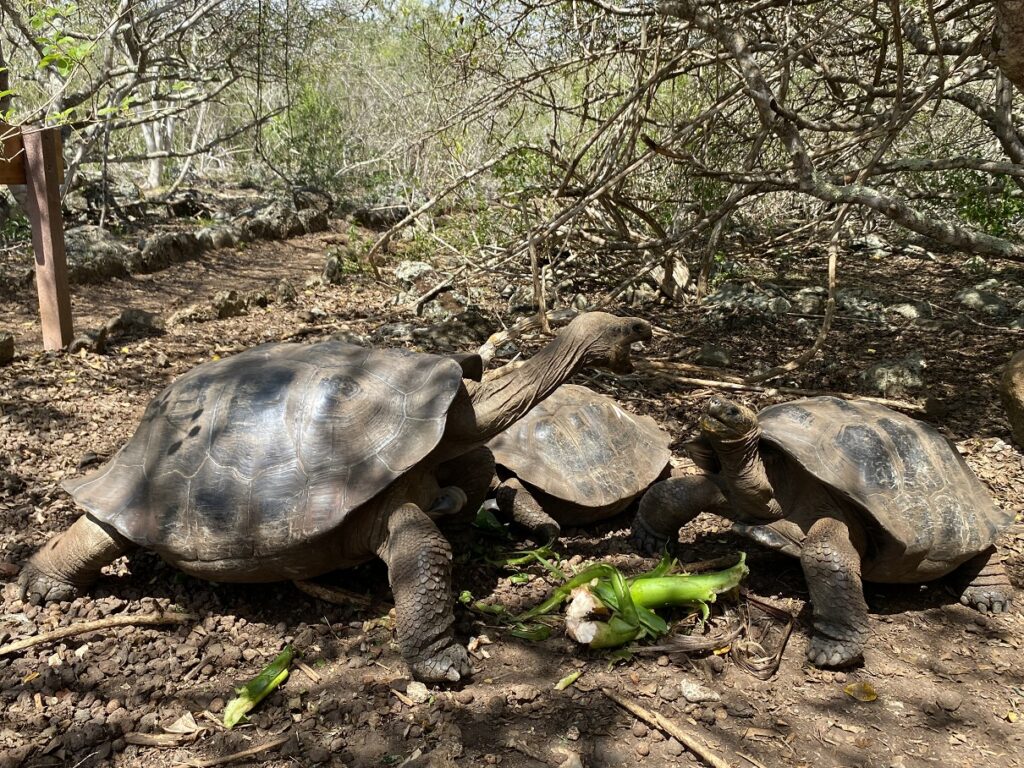
Back at the main entrance, a big tortoise was not happy and raised its head over a smaller tortoise that had tried to bite into its meal, dominance in slow motion. After about an hour or so at the centre, we left for Puerto Chino.
Puerto Chino
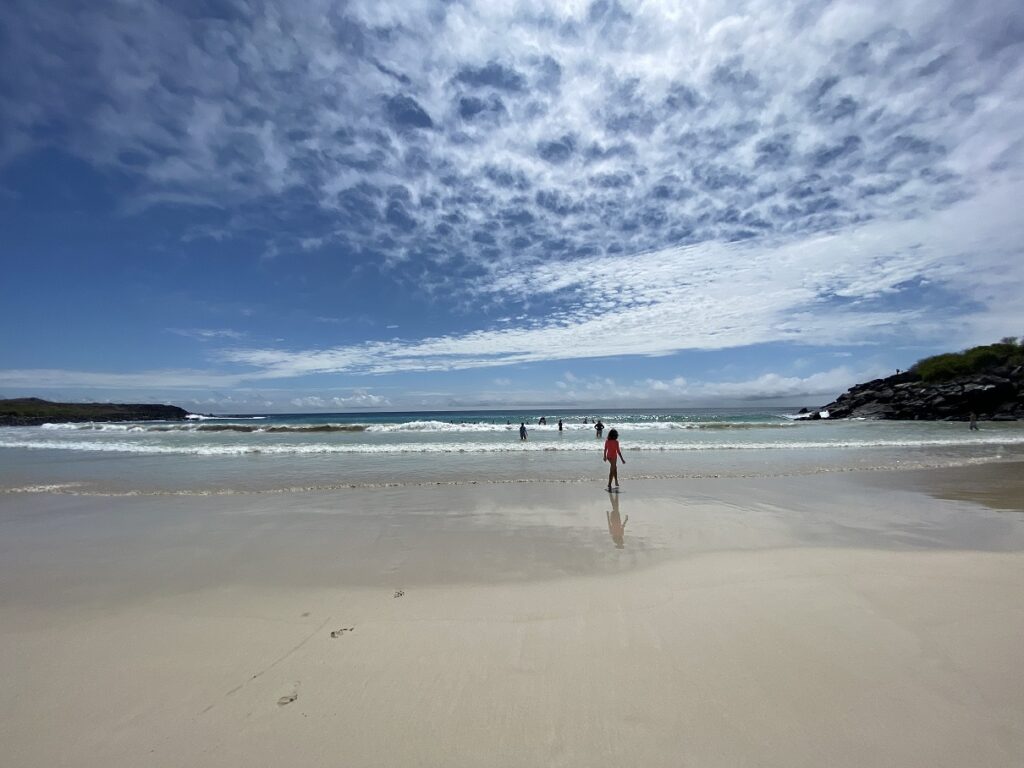
From the parking lot, it was a short walk to the beach. Puerto Chino is a small but beautiful, white-sandy beach on the southeast side of the island.
A few sea lions were resting on the rocks, while one of them was enjoying the waves and swimming in the shallow waters with all of us. It was a bit intimidating at first, but I got used to it as I saw locals and other tourists even had their kids go into the water alone.
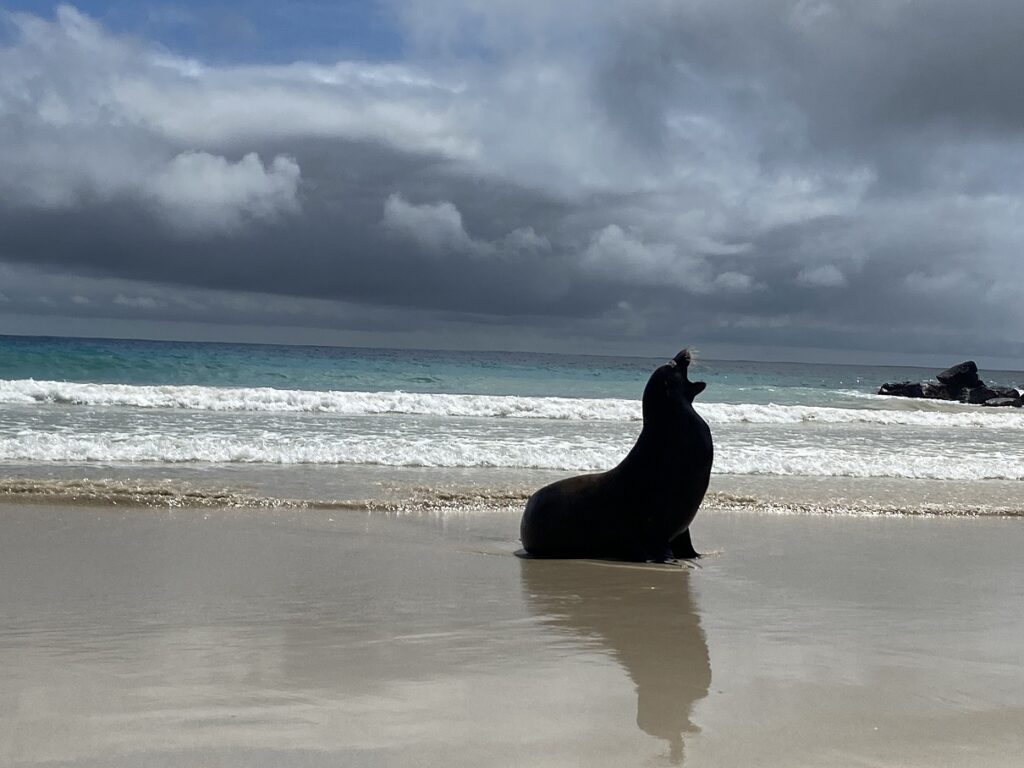
Other than the occasional barks, the sea lions kept their distance, and everyone enjoyed the beautiful day on the beach.
El Junco Lagoon
It is the only permanent freshwater lake on the Galapagos Islands and was formed when a volcanic crater collapsed. El Junco Lagoon is located in the San Cristobal highlands, and the weather can be quite different from the city.
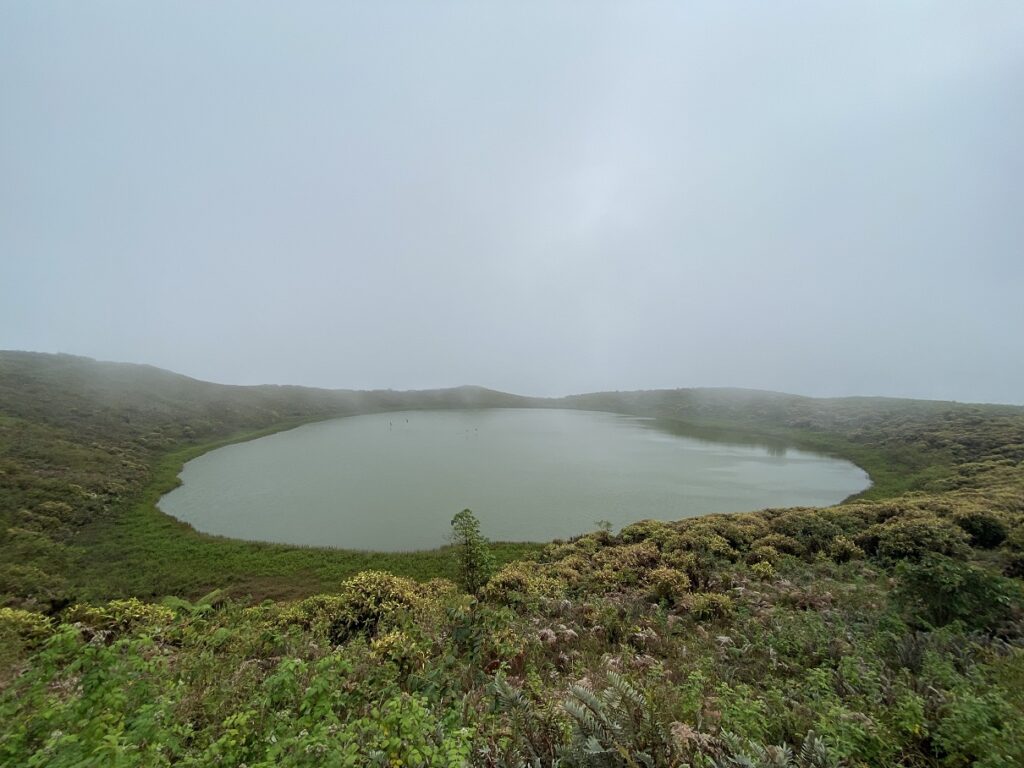
When we passed this place in the morning, it was raining. Now, in the afternoon, the rains had stopped, but it was still cloudy. It was a short but steep hike to the top. After a few minutes, the clouds cleared a bit giving us a full view of the lagoon. Even in such a small area with limited visibility, we see quite a few different species of birds.
Kavya and I decided to do a short run around the rim of the lagoon. The trail was muddy due to recent rains, but it was a fun short run.
Playa Mann
In the evening, we walked over to Playa Mann, a nice beach walking distance from the town. Here again, the main attraction was the site of sea lions on the beach. Even more than the ones at Playa de Oro in town.
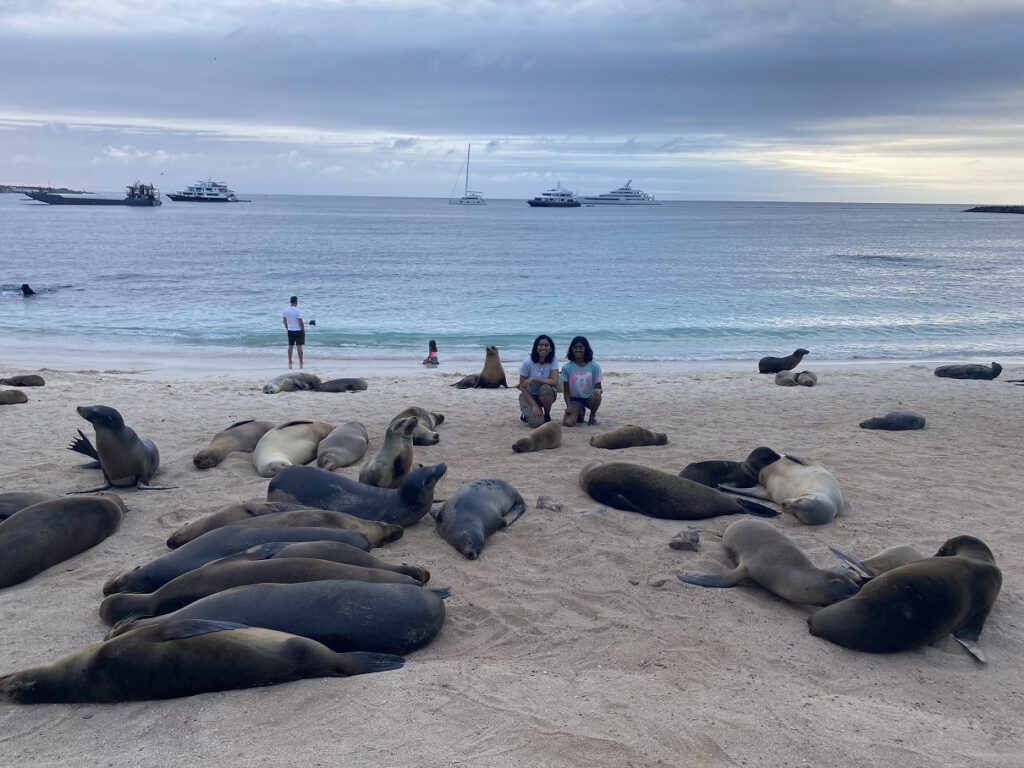
During our stay, we returned to this beach one more time. Enjoyed the water and then had some lunch at one of the restaurants lining the entrance to this beach area.
Kicker Rock (Leon Dormido)
As we planned our trip, we had read a lot about the Kicker Rock and snorkelling tour that people take when they visit San Cristobal. So for our third day on the island, we booked a full-day tour with one of the local guiding companies.
The day before the tour, we visited the guiding company’s office and tried on wetsuits and fins. The next day, we gathered at the office around 7:30 am. I think it was a total of about 12 people in our boat. Four of them would be scuba diving, and the rest would be snorkelling.
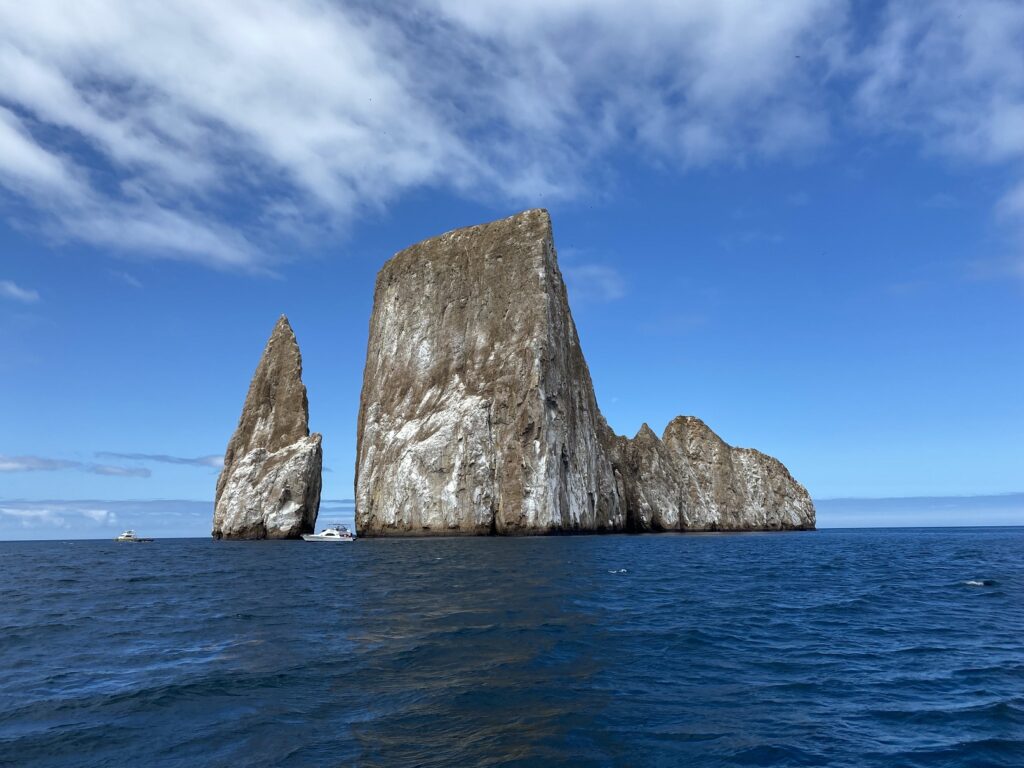
It took us one and a half hours to arrive at the site. The boat ride was choppy, and given my past experience on boats, I was always on the alert for any signs of seasickness. Our snorkelling guide was bilingual, but didn’t share much beyond some basic instructions. I think he believed in the school of hard knocks.
Once at the site, we put on all the gear and got into the water. One guy from Greece got in with just his snorkel. No lifejacket. We were supposed to be in the water for around an hour. I was already impressed by this Greek Aquaman.
Once everyone was in the water, the guide signalled us to move into the channel. Since this is deep open-sea snorkelling, the water was rough. For someone like me, who is not very comfortable in the water, it was not a very pleasant experience. I was one of the slowest in the group.
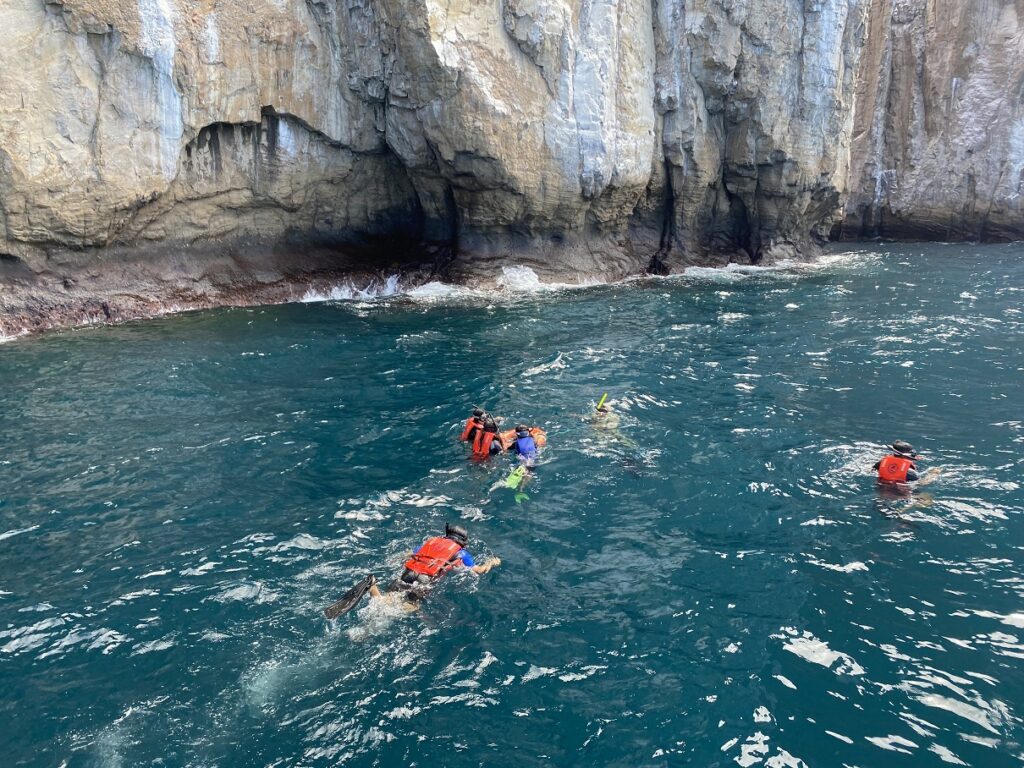
However, I still enjoyed watching sea lions, rays, and various types of fish. At one point, we even saw the divers in our group with their instructors. While all of us floated on the surface, the Greek swimmer dove deep, almost to the same level as the divers. Sealions seemed to be enjoying swimming with him as well – a true Aquaman. Our guide would dive with him and shoot him with the GoPro. They got some great footage.
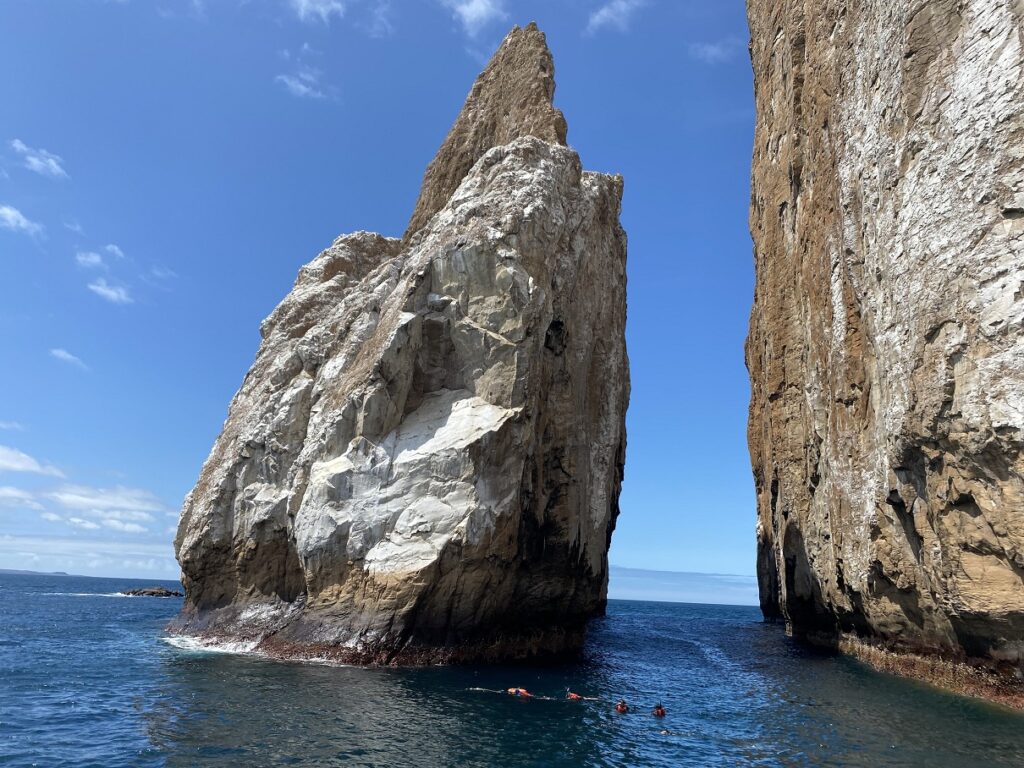
After about 45 minutes, we had crossed the channel, explored the areas around the rock, and then got back on the boat. After a break, it was time for round two. However, I was done, and I stayed on the boat. Kavya did as well. We both were cold. Kasturi, who usually feels cold (relative to us) and is most scared of water, jumped in and enjoyed her round two.
Secluded Beach
Around noon, we made our way to a secluded beach. White sandy beach, crystal clear turquoise water, no one else in sight, except for fellow tourists – paradise or making of a new thriller reality show?
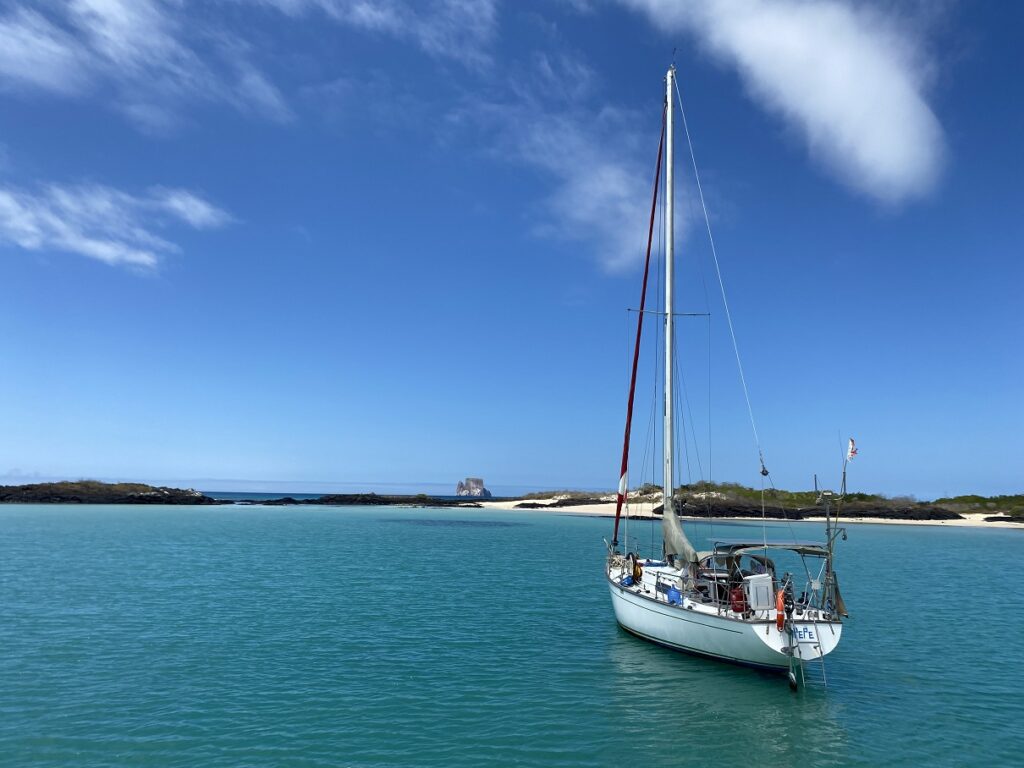
A dinghy got us to the shore. Our naturalist guide offered to take us on a small trek, but due to exhaustion combined with our experience with his guiding skills, we said no. We would just stroll around this paradise.
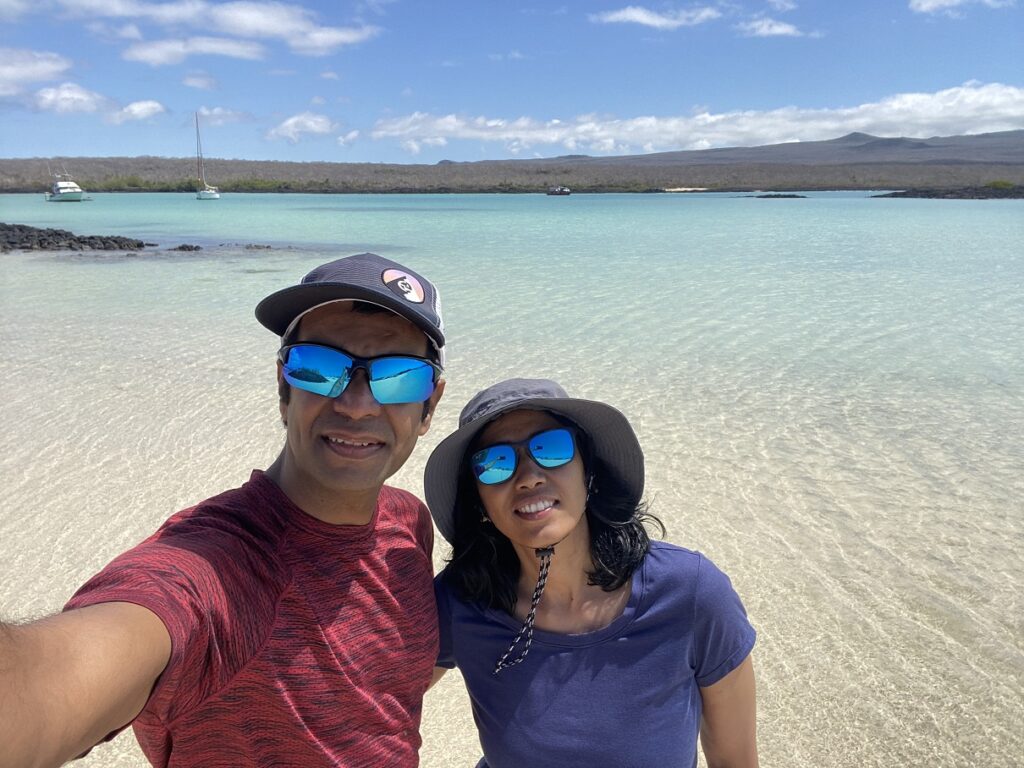
Kavya started chatting with a teenage girl in our group and they were walking along the beach first. Then, they started swimming and were going farther and farther from the beach. Eventually, they swam back to the boat. Then they would dive into the water from the boat and swim back to the beach.
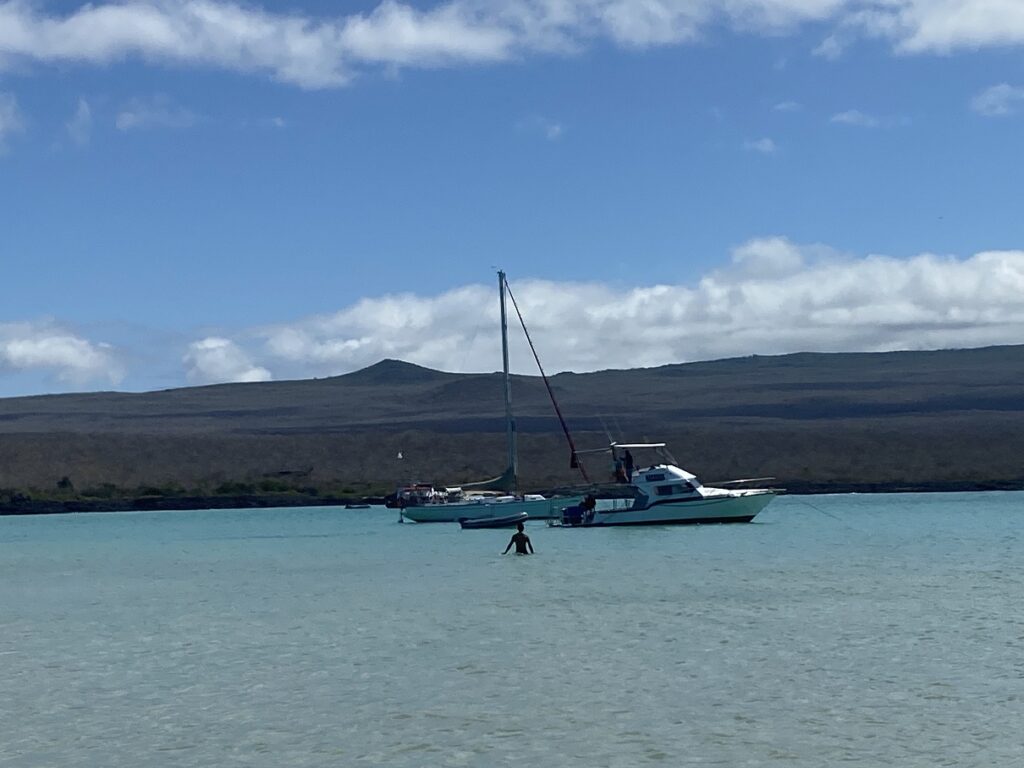
Terrified, but inspired by my daughter, I cautiously started walking towards the boat. I was able to walk more than the kids, but soon came to a point where I had to swim. I was less than 10 m away from the boat, but still had doubts. Let me explain.
Swimming Lessons – TMI
I learned to swim at the age of 16 in a well on a farm near our community in my hometown of Ahmednagar in India. I would make my way down to the well with a rope tied around my waist. My friend would be at the top, grabbing the rope and holding me afloat as I tried to “swim”. I would even wait for the water in the well to calm down, before I left the safety of the platform I was standing. Eventually, my friend would start tugging and get me in the water.
Soon enough, I would get tired and start pulling on the rope. To deter this (and my friend had warned me that he would do this), he would then feed the rope, and I would find myself drowning. Eventually, we would run out of rope, and my friend would guide me back to a step in the well, where I would catch my breath. Somehow, I survived these crude lessons and learned to swim, but only for a short distance. It was a well, after all.
What we lacked in endurance, we made up in stupidity by jumping and diving into the well, and we got really good at it. My highest jump is from a 30 m board at a proper swimming pool. I could jump 30 m, but could barely swim that distance.
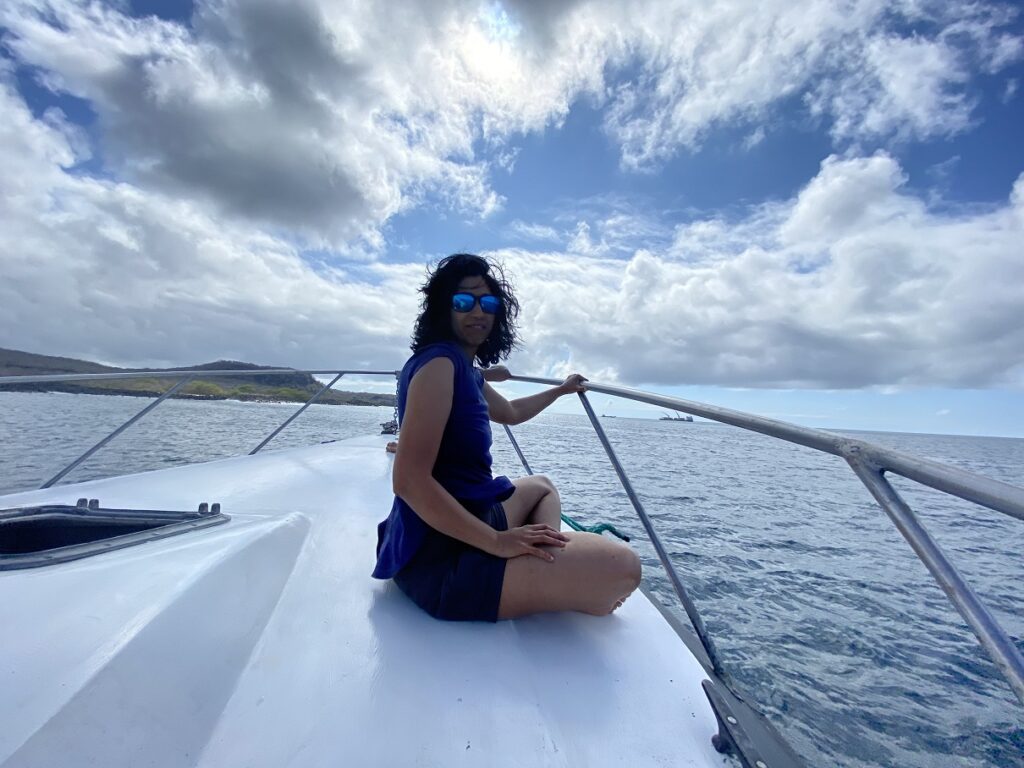
Now, back in paradise, Kasturi was watching, Kavya was cheering, while I stood watching the boat. Finally, after a couple of pep talks, I swam to the boat. It was not elegant, but I did it. I enjoyed it so much that I did it again. Finally, it was time for us to head back. Kasturi, Kavya and I spent some time on the deck of the boat, and it was a fun ride back.
La Loberia
A few people that we had met recommended La Loberia as it is a quiet beach and good for snorkelling. On our last day, we took a taxi and then hiked to the beach from the parking lot.
When we arrived, there was just one local lady swimming at the beach. I put on my snorkel gear, walked around in the shallow water and tried to capture some pictures/videos.
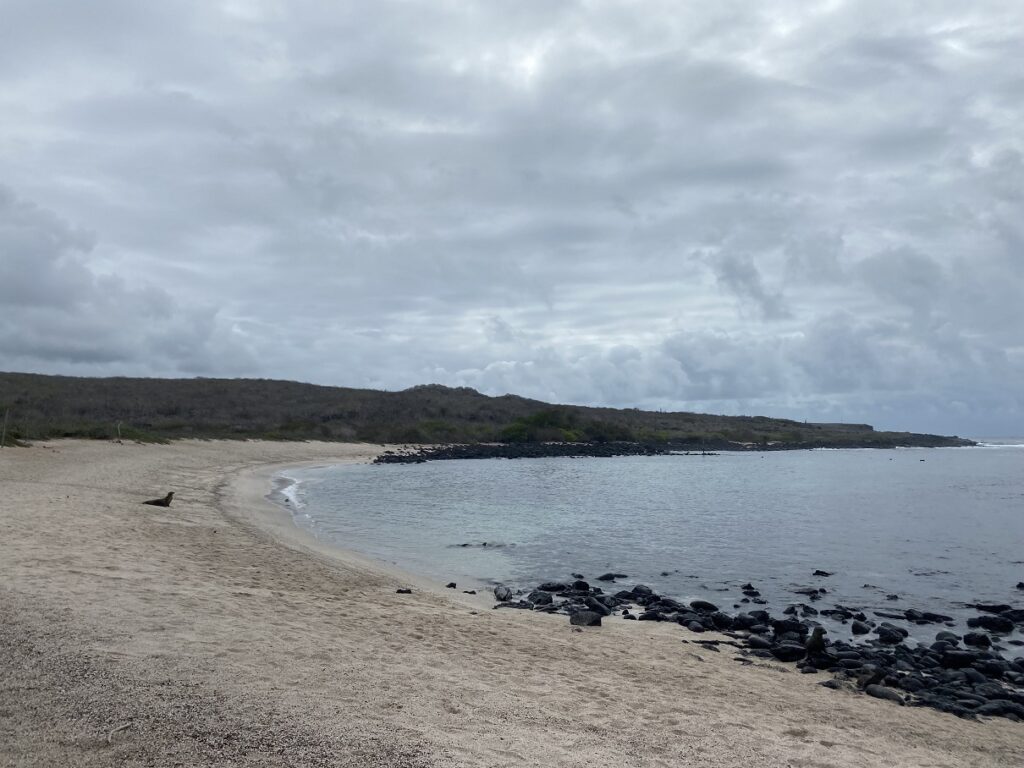
Saw a few different types of fish and a family of sea lions. One of the baby sea lions got really curious when it saw my lanyard attached to the waterproof case dangling in the water and tried to bite it. I kept my distance after that.
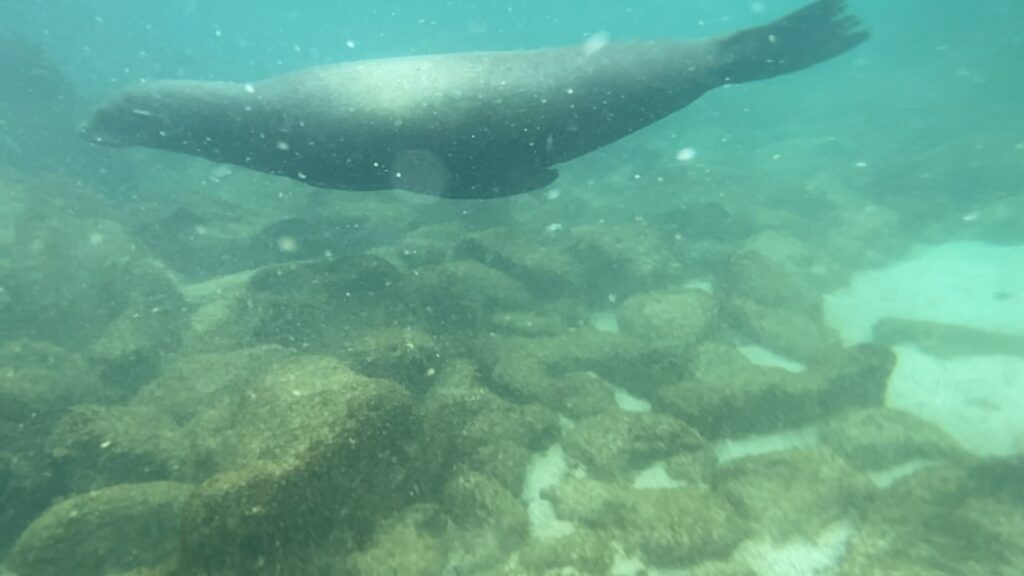
After a couple of hours, we left the beach and headed back into town for lunch. Later in the afternoon, we took the ferry to Santa Cruz.
Santa Cruz (Puerto Ayora)
Once we arrived at Santa Cruz, the bags had to be screened again. From the pier itself, we could see a species of shark, which was quite surprising.
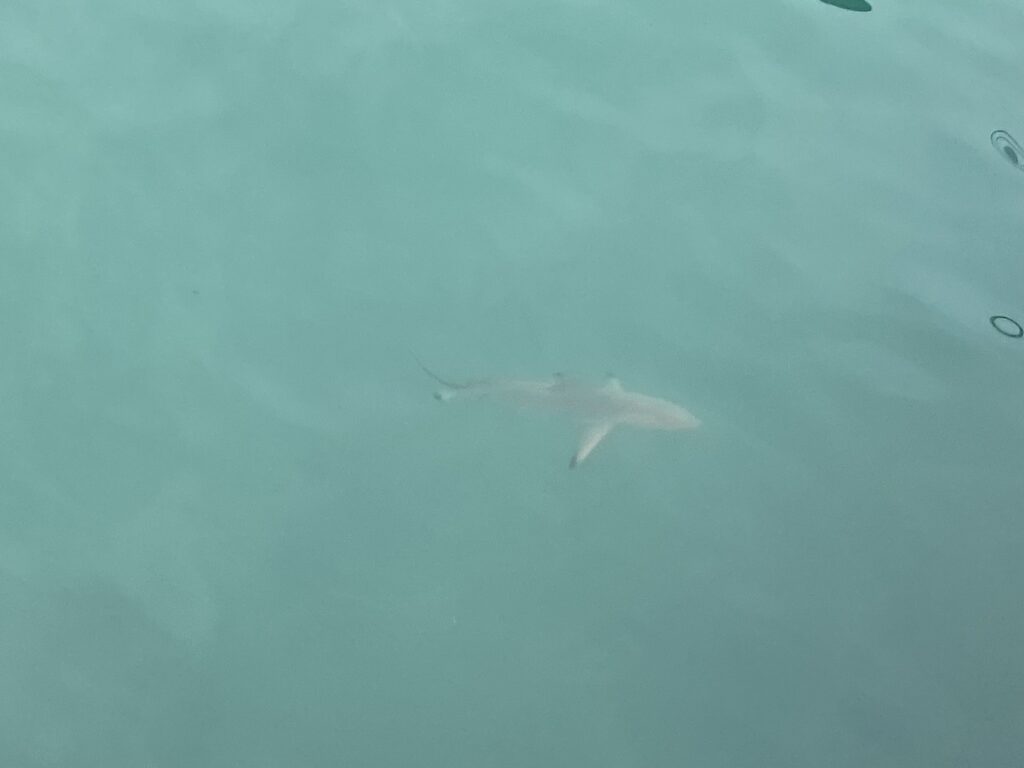
We were staying at a hostel a couple of blocks from the pier and we were happy to see a good mix of restaurants, including a Chifa (Chinese restaurant).
Tortuga Bay
The next day, we walked from town to the entrance of Tortuga Bay National Park. After signing in, it was a 2.5 km walk on a paved trail to Playa Brava and another km or so to Playa Mansa.
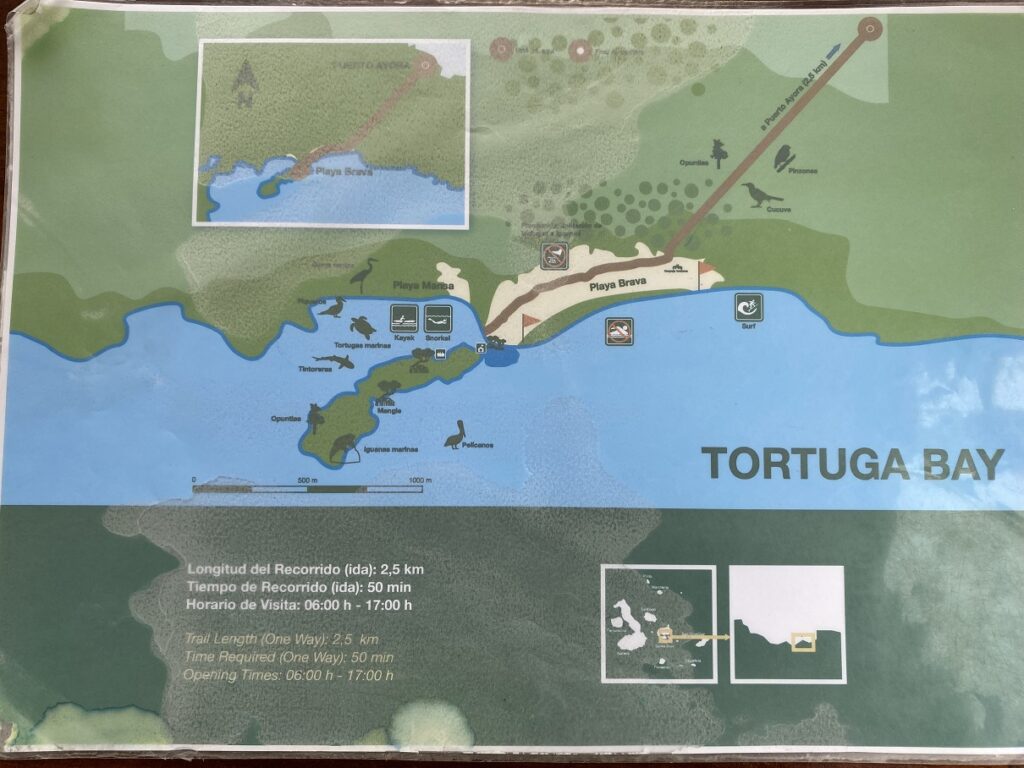
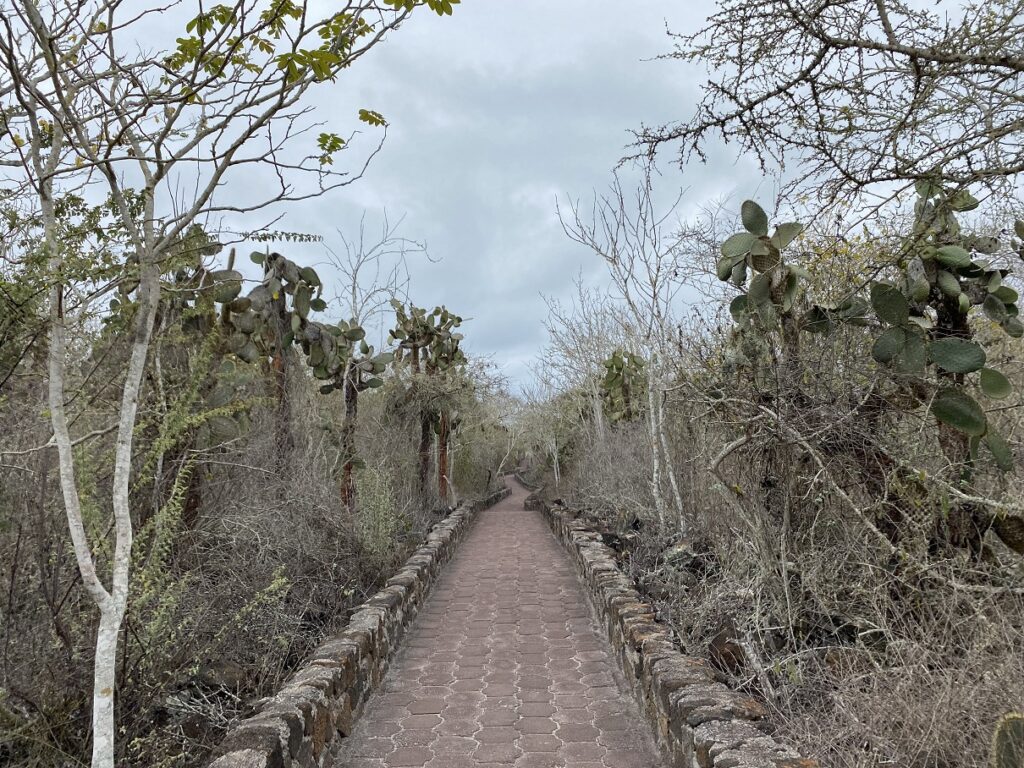
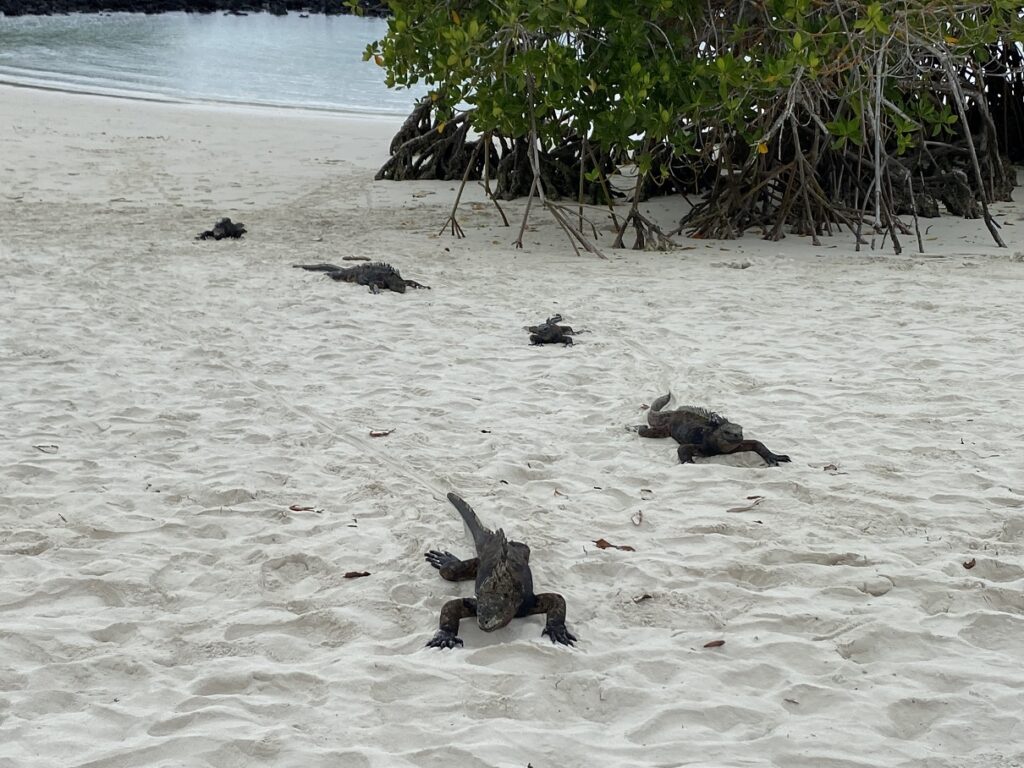
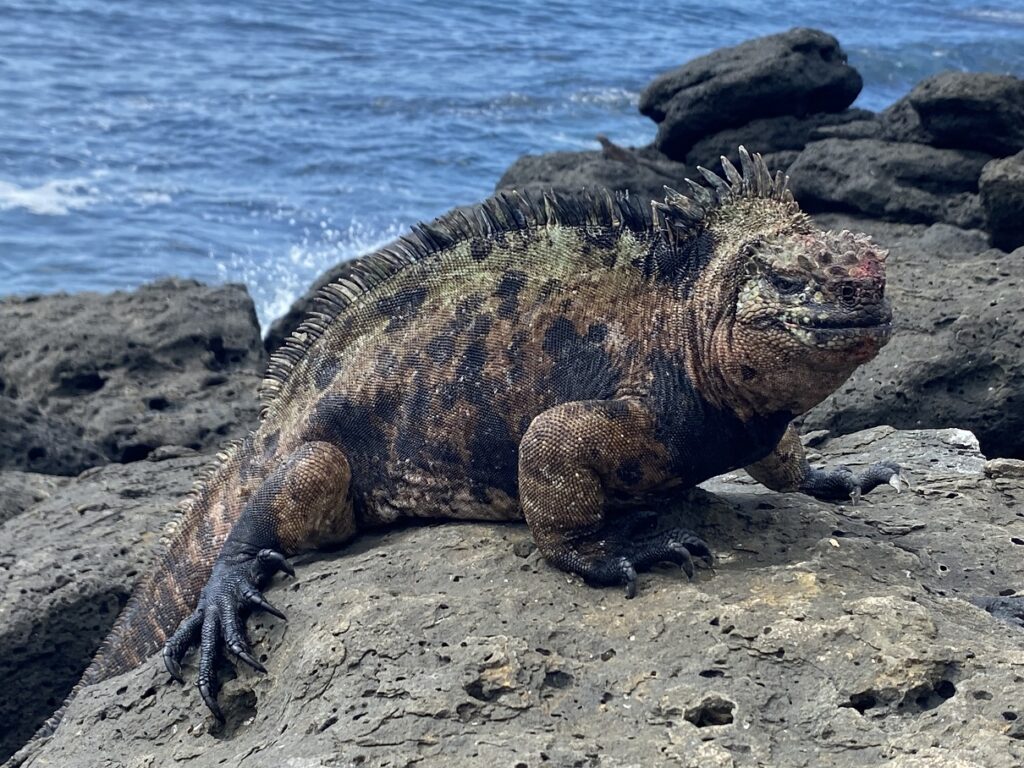
Playa Brava is a beautiful white sandy beach, but swimming is not allowed due to strong currents. It was an enjoyable walk along the beach. As we neared the mangroves, there was a family of marine iguanas.
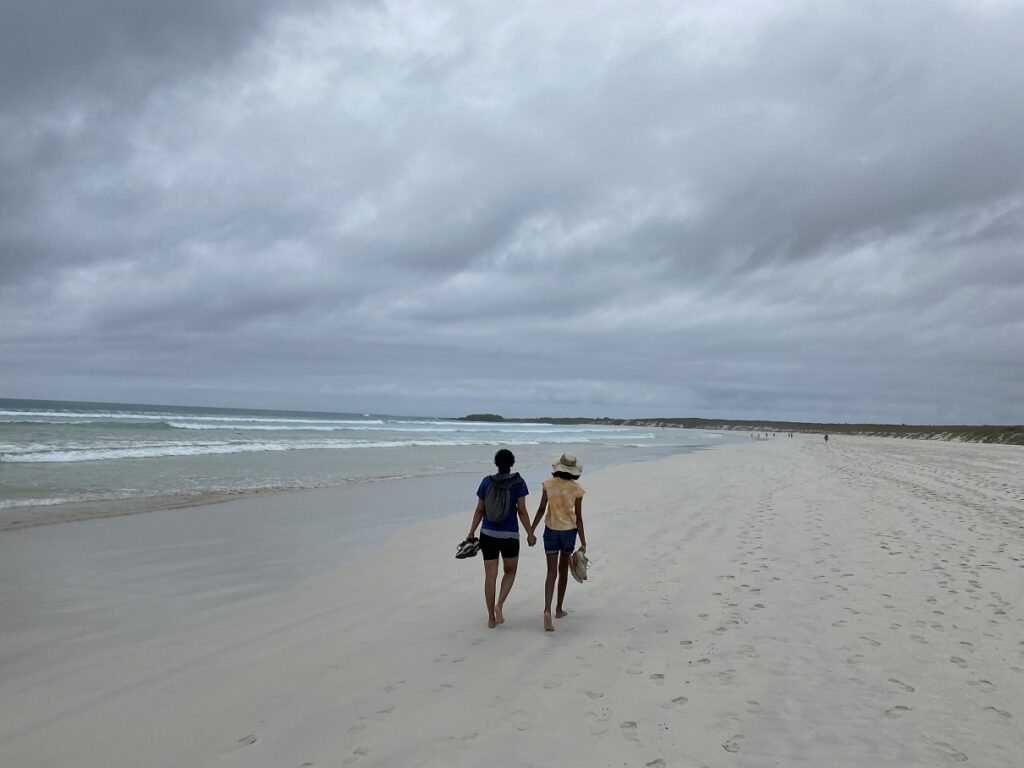
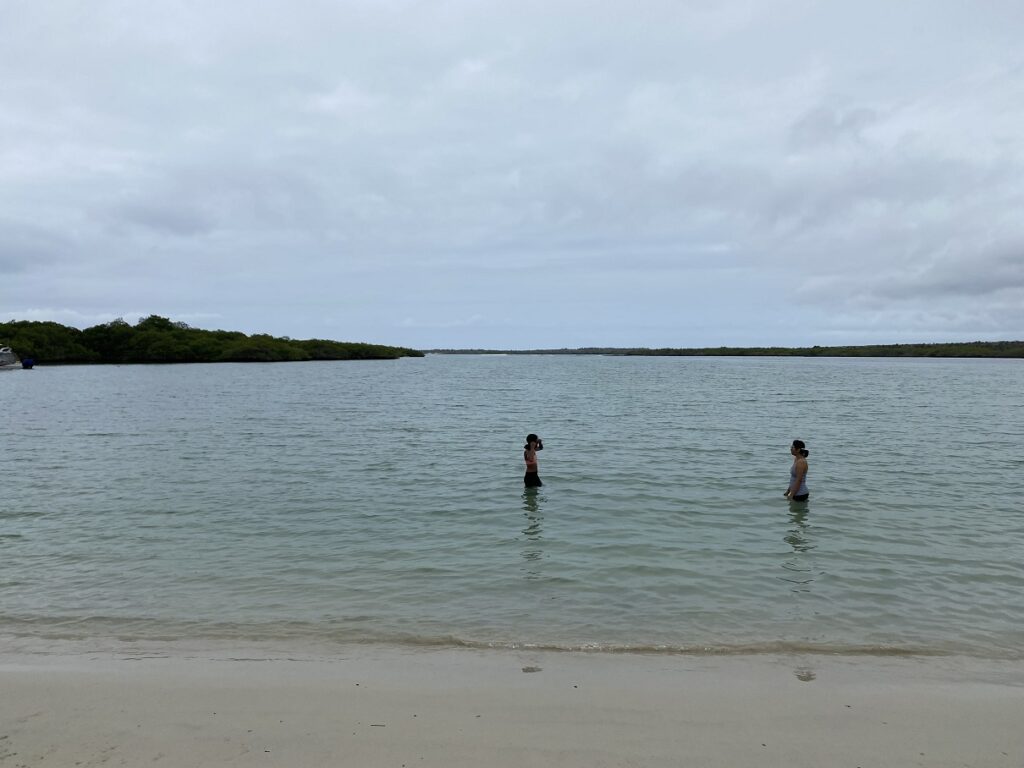
We continued to hike along the trail and arrived at Playa Mansa, a much calmer beach. It is popular for swimming, snorkelling and kayaking. Kasturi and Kavya swam close to the shore, while I tried to snorkel in different areas. It was probably the longest I was in the water, as I could just walk around most places. Saw different types of fish, but no turtles.
El Chato Ranch
We were back in town for lunch and then later in the afternoon, took a taxi to the El Chato Ranch – a private reserve for giant tortoises. This reserve is in the highlands and about 22 km from town. As we got closer to the ranch, we spotted a couple of these giant tortoises, some even on the road.
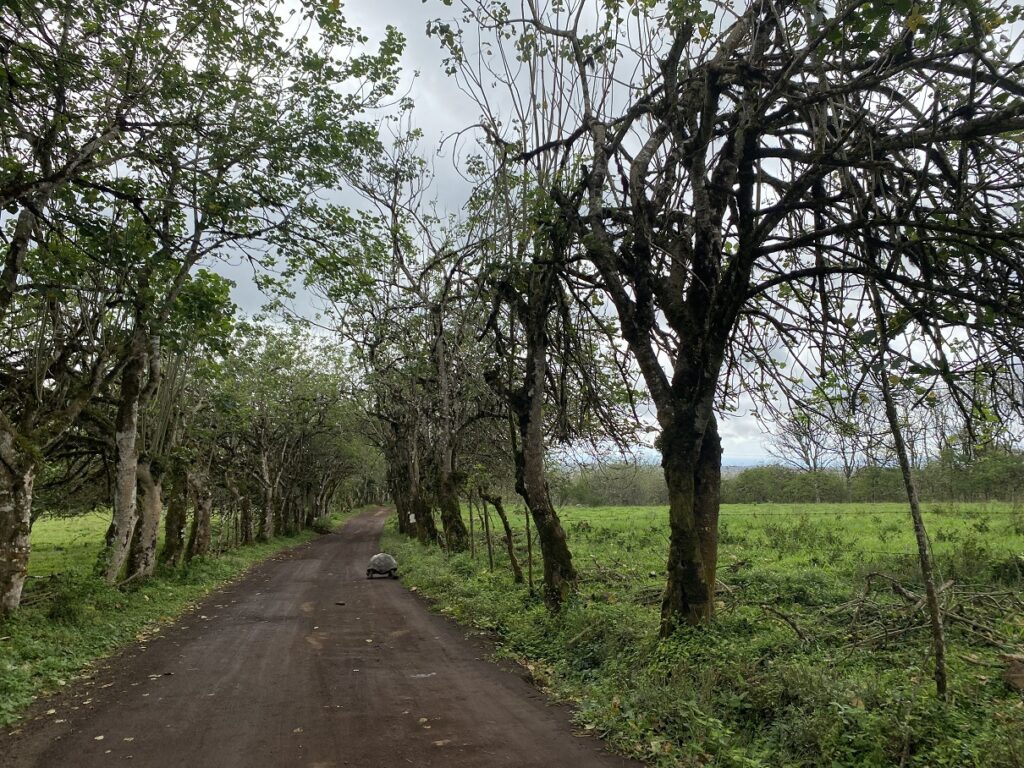
Once we arrived at El Chato, we got our ticket from the counter and joined the next tour that was starting in 10-15 minutes.
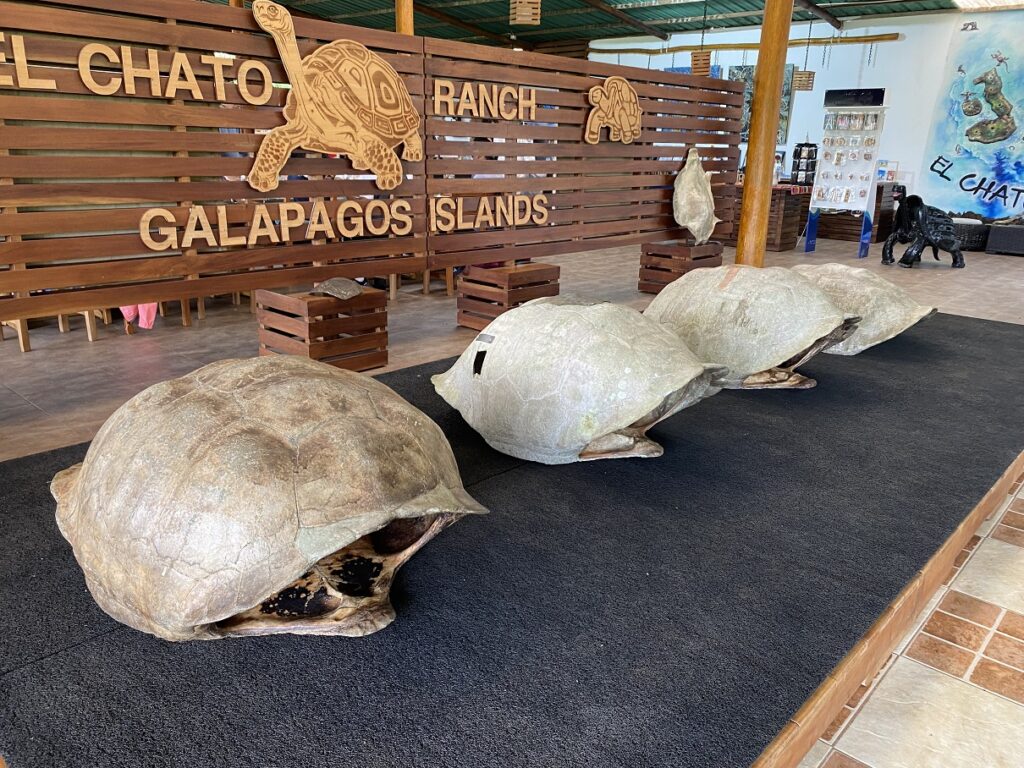
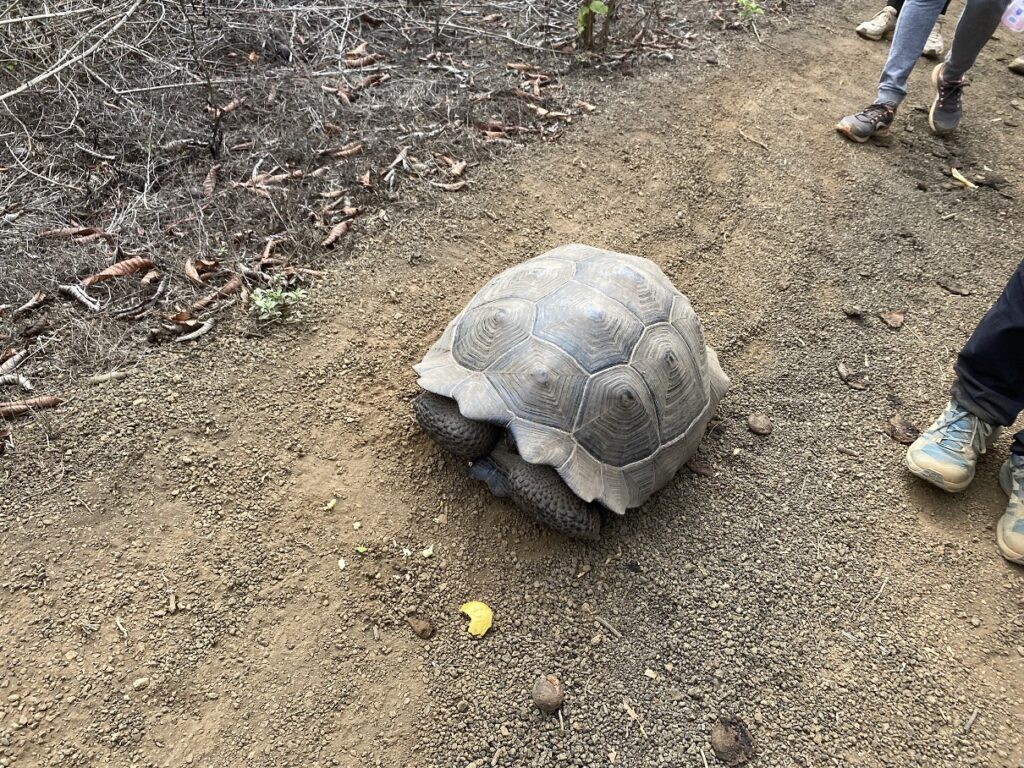
The guide took us on a trail that went around the property, sharing interesting facts about the giants and the property. Soon, we came across one of the oldest tortoises on the property.
The guide said it is difficult to know the exact age, but he estimated that this tortoise was 180 years old. It was close to 2 metres long and likely weighed more than 250 kg. This giant probably met Darwin.
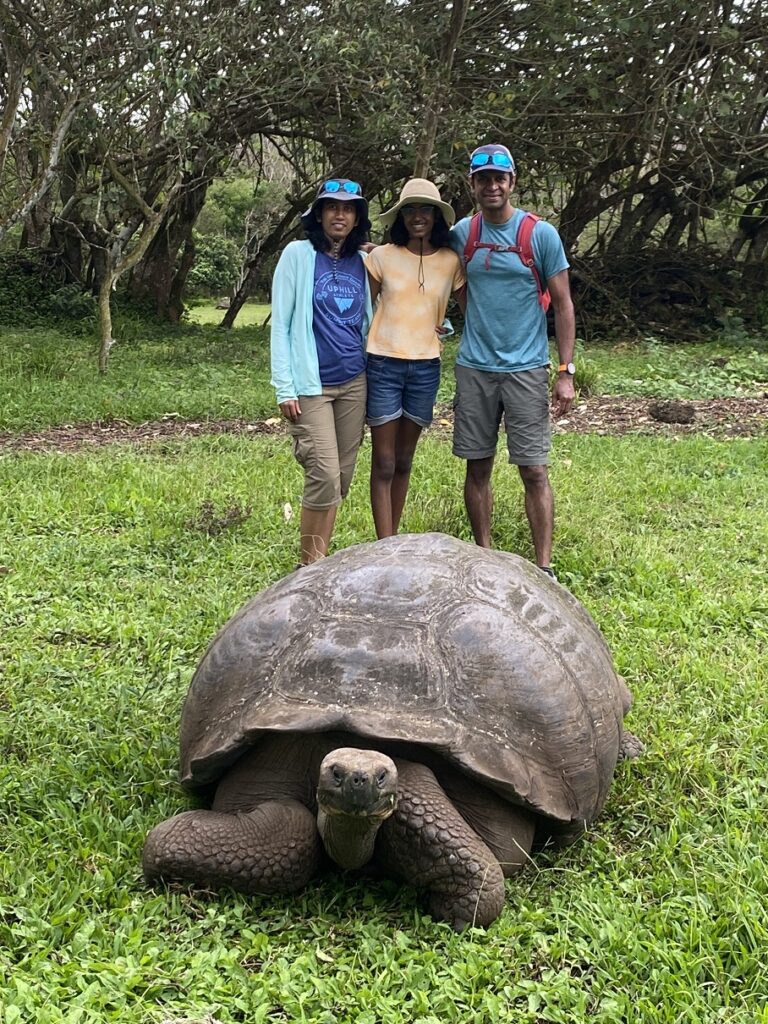
One of the interesting facts shared by the guide is that these tortoises make a three to four-week trek from the highlands to the coast to lay their eggs and then return once the eggs are laid. At this point, some people in the group were quite sad and couldn’t believe that the mother would leave the babies to grow up by themselves.
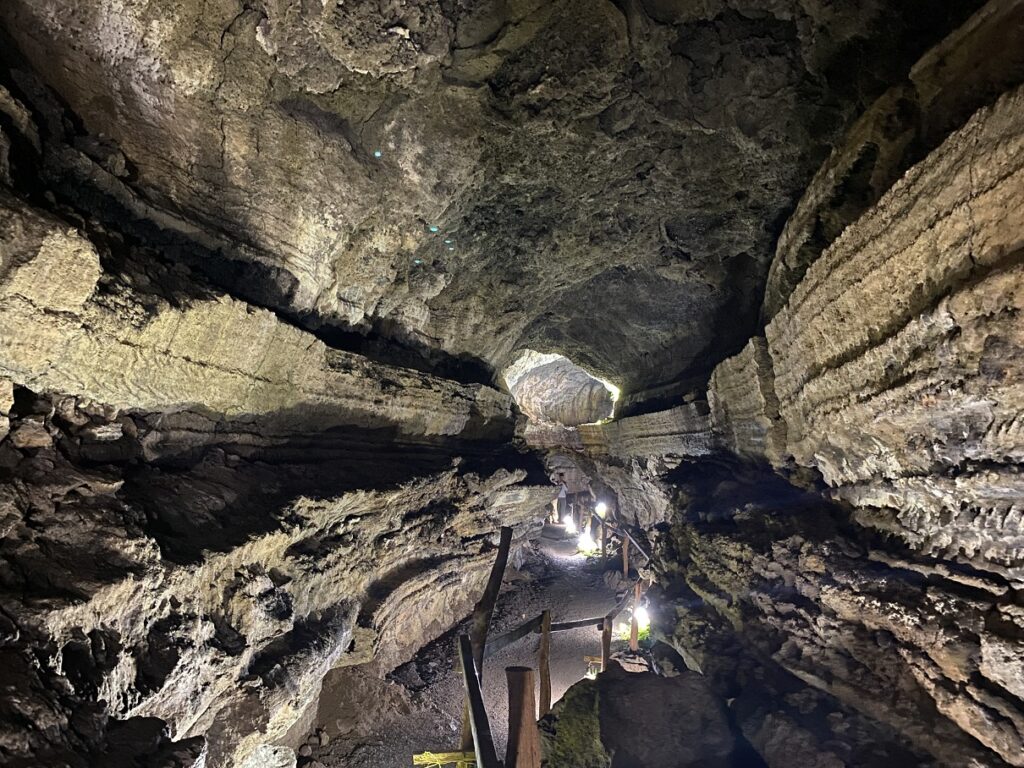
The final part of the tour was through a lava tunnel. It was an interesting experience walking through this volcanic formation.
Los Gemelos
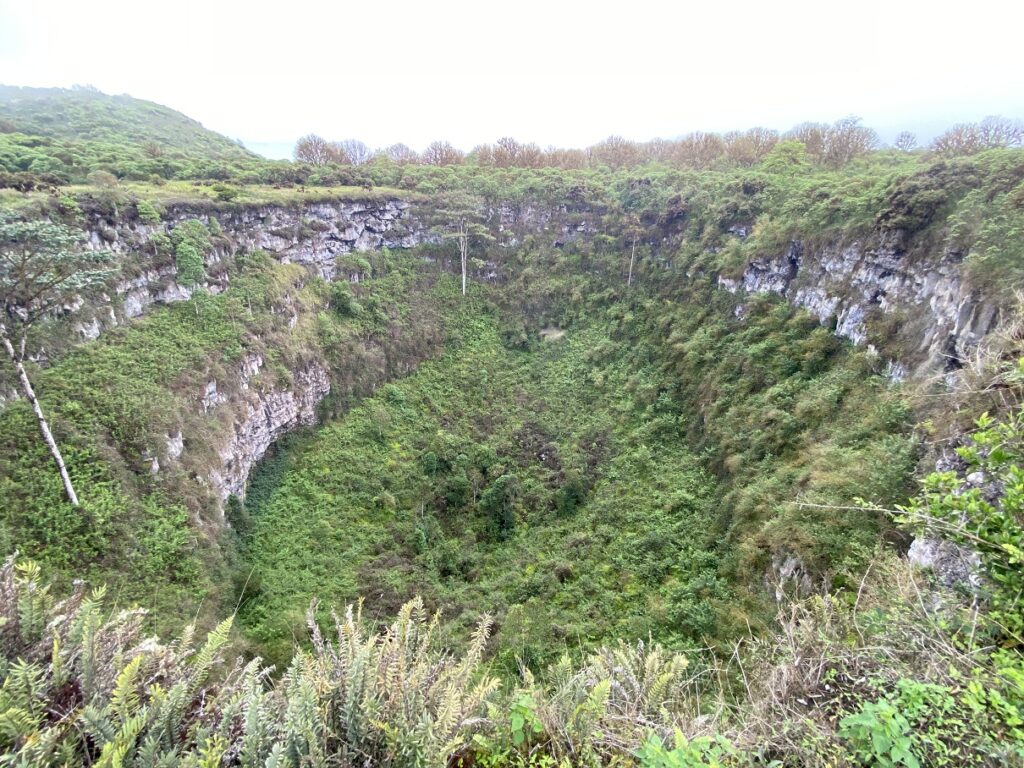
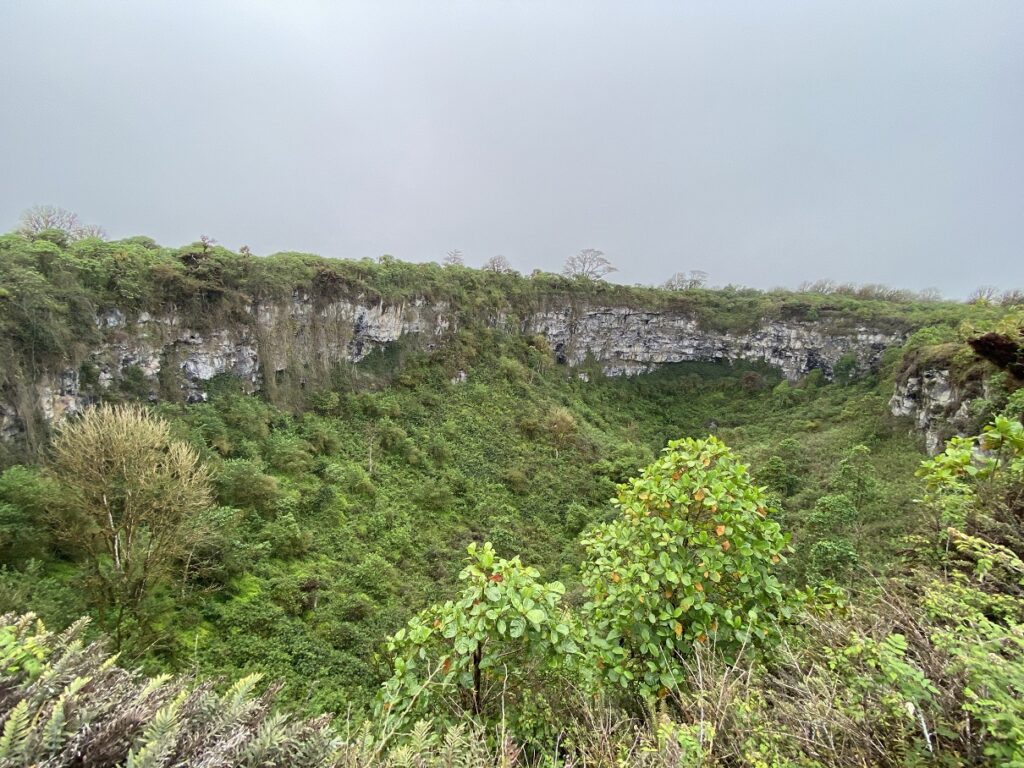
After El Chato, our driver took us to Los Gemelos – twin craters. These are actually sinkholes and unique spots in the highlands.
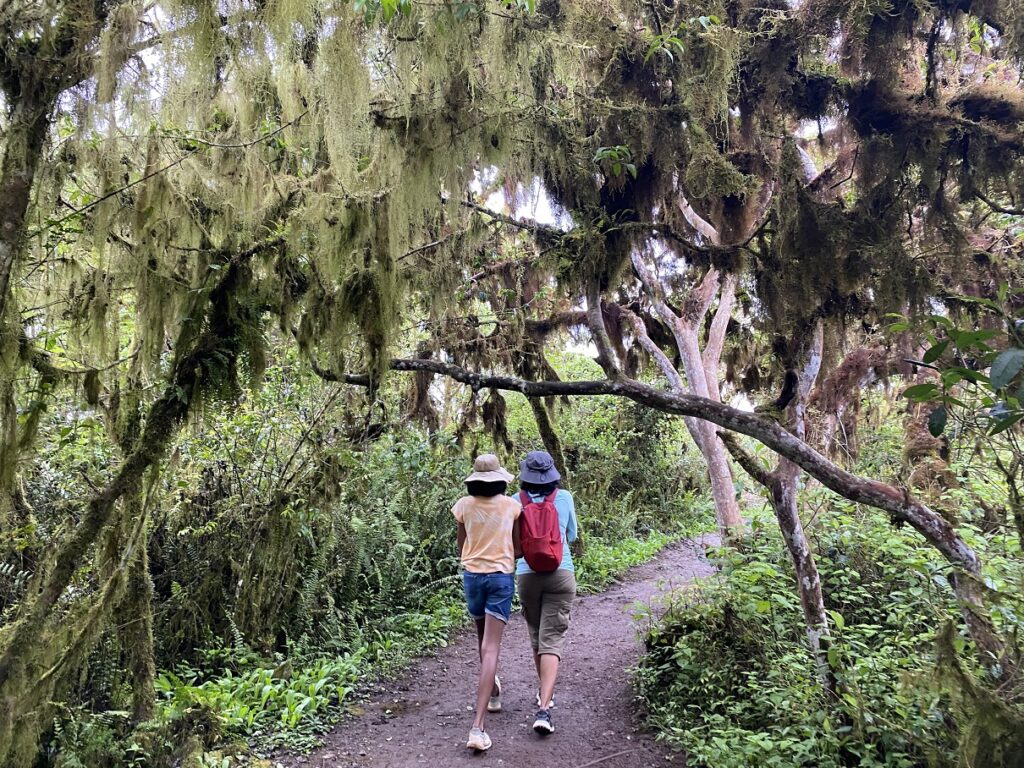
It took us less than 20 minutes to visit both the sinkholes on either side of the main road. The short trail goes through the Scalesia forest, which is a unique habitat (found only in Galapagos) for numerous plant and animal species.
We realized later that we could have stopped by El Chato Ranch and Les Gemelos on our way from Puerto Ayora to the airport on Baltra Island. But it would have been a bit rushed and hectic, as we would be arriving on a ferry from Isabela and then heading to the airport.
Charles Darwin Research Station
The next day, we had a late start, and after breakfast, we walked to the Charles Darwin Research Station. You could hire a guide, but we decided to just go by ourselves. Without a guide, some areas like the breeding centre were off limits to us. Since we had already seen the giant tortoises at the ranch, we were okay skipping the breeding centre.
We mainly visited the Van Straelen Interpretation Centre and the Exhibition Hall. Both of these places had a ton of information about the different animal species on the Galapagos Islands and the conservation efforts. The Exhibition Hall even had some short movies.
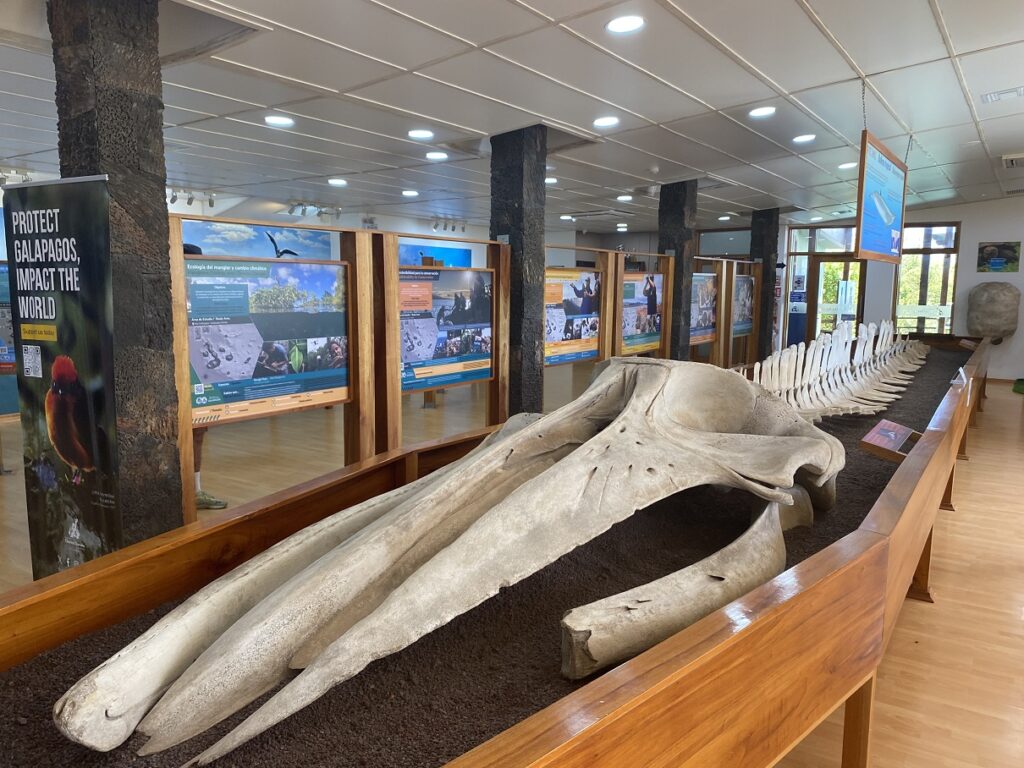
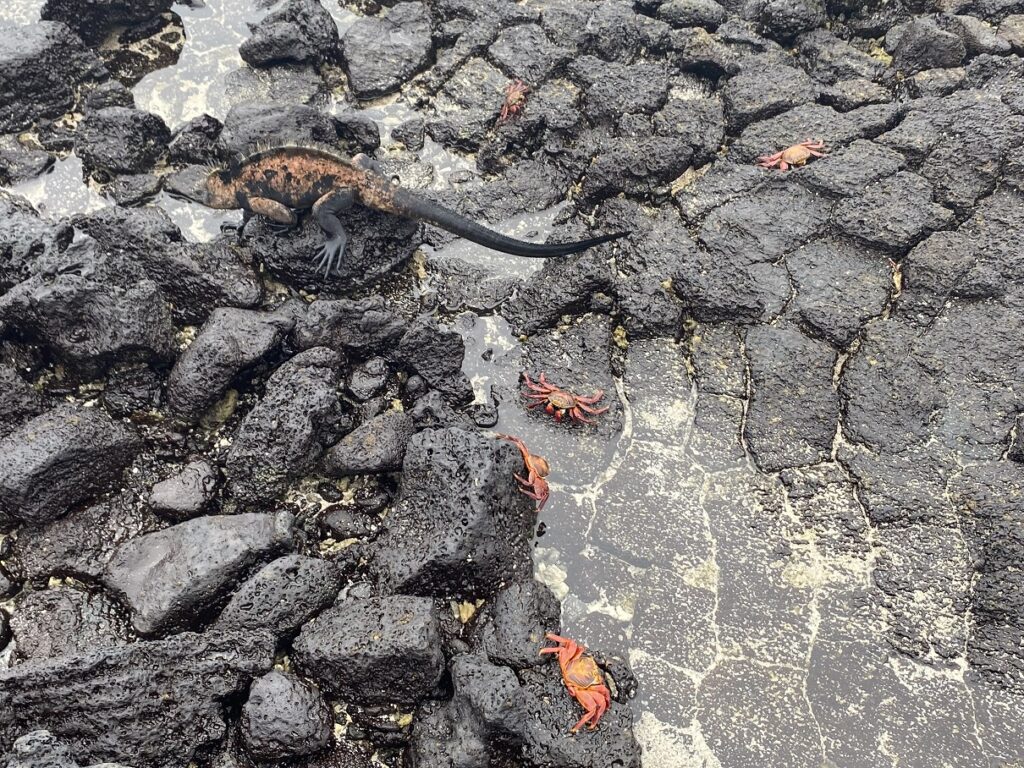
My favourite part was seeing the gigantic Bryde’s Whale skull on display at the Exhibition Hall. Past the Exhibition Hall, we hiked to the rocky La Ratonera beach, where we saw a lot of colourful crabs and some iguanas.
Bay Tour
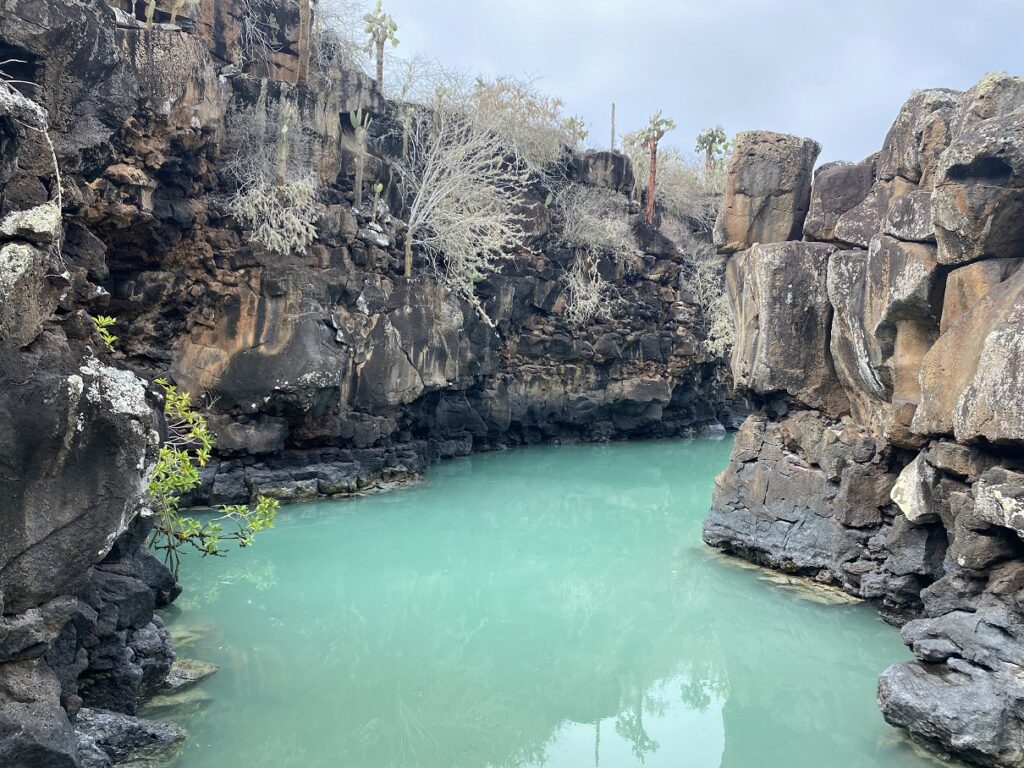
For our third day on the island, we had booked Tour de Bahia (Bay Tour) – which is a mix of land-based activities and snorkelling. It was a short boat ride from Puerto Ayora to Bahia Franklin. A few minutes from the dock is the Canal del Amor (Love Channel). A beautiful channel with turquoise water.
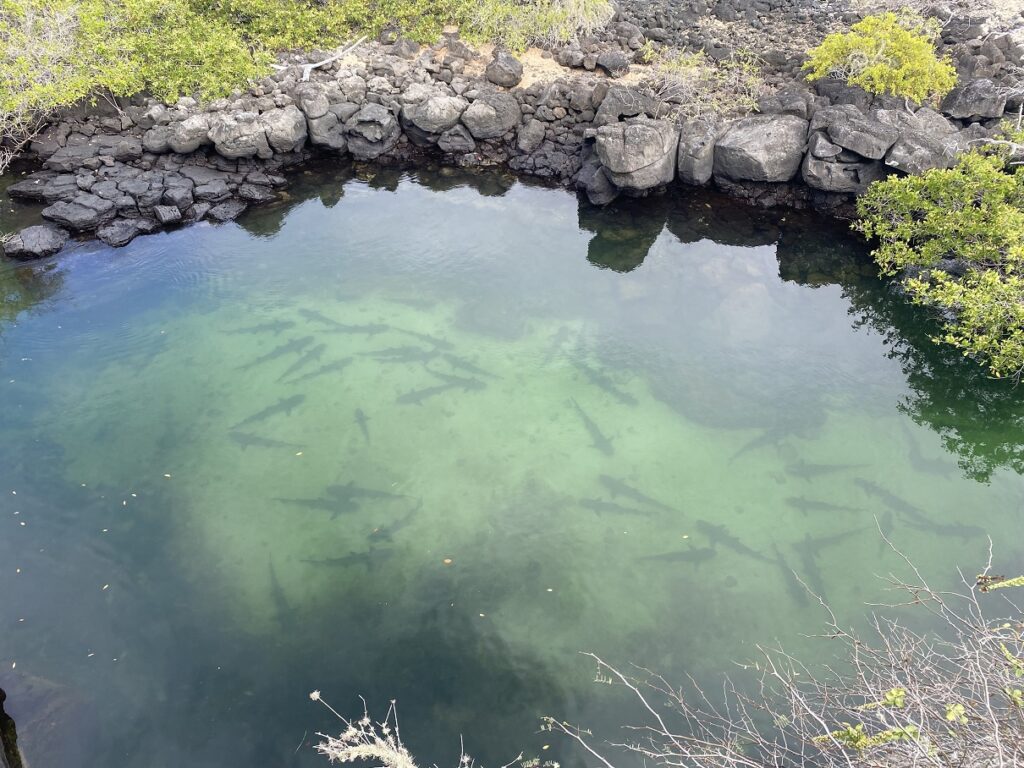
We went up the stairs and then walked to the Canal de Las Tintoreras, where the reef sharks were resting. I hadn’t had much luck spotting these in my previous snorkelling attempts, so it was great to see them finally in this channel.
We then hiked to Playa de los Perros, which is another rocky beach. Here, we finally saw a blue-footed booby bird, which was named after its distinct blue feet and for being bobo (Spanish for silly or foolish). But the unique name makes for some interesting t-shirts sold in town.
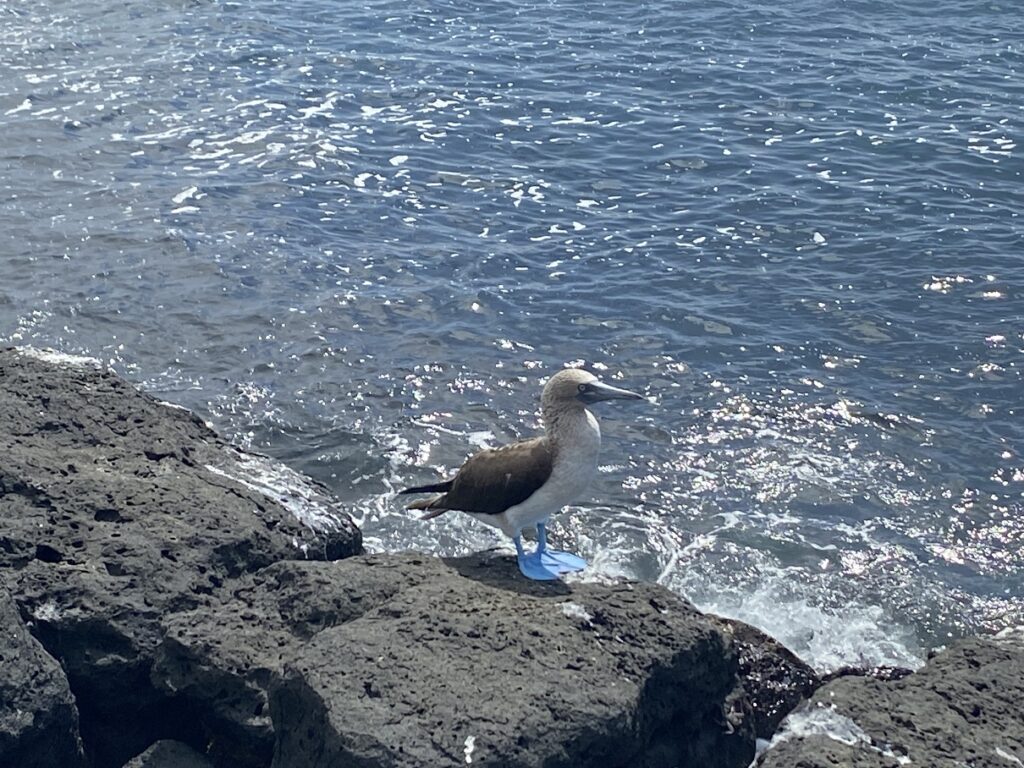
This beach is also home to some of the largest iguanas we saw during our trip to Galapagos.
The next stop of our tour was Las Grietas – one of the most popular spots for tourists. Las Grietas is a canyon with volcanic walls and natural pools that make for a unique swimming and snorkelling experience. It was another short hike to get to the entrance of Las Grietas.
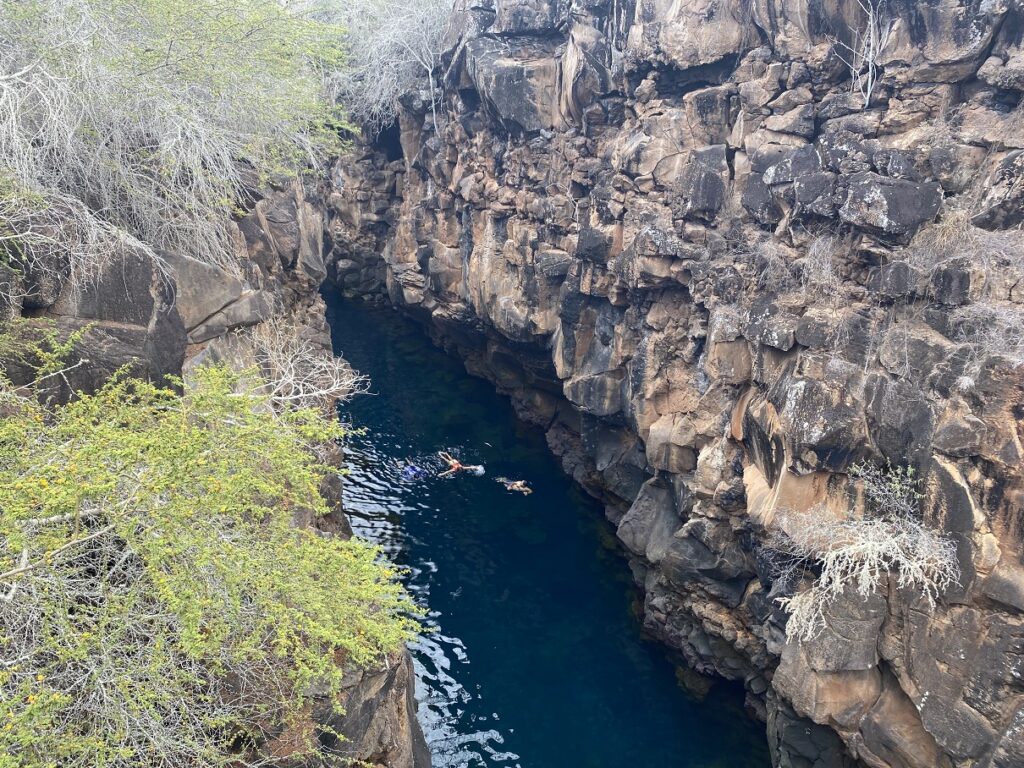
We put on our life jackets and climbed down to the pool, while others jumped from a platform. Getting to the second and third pools can be tricky, and given the time constraints of the tour, our guide asked us not to go beyond the first pool.
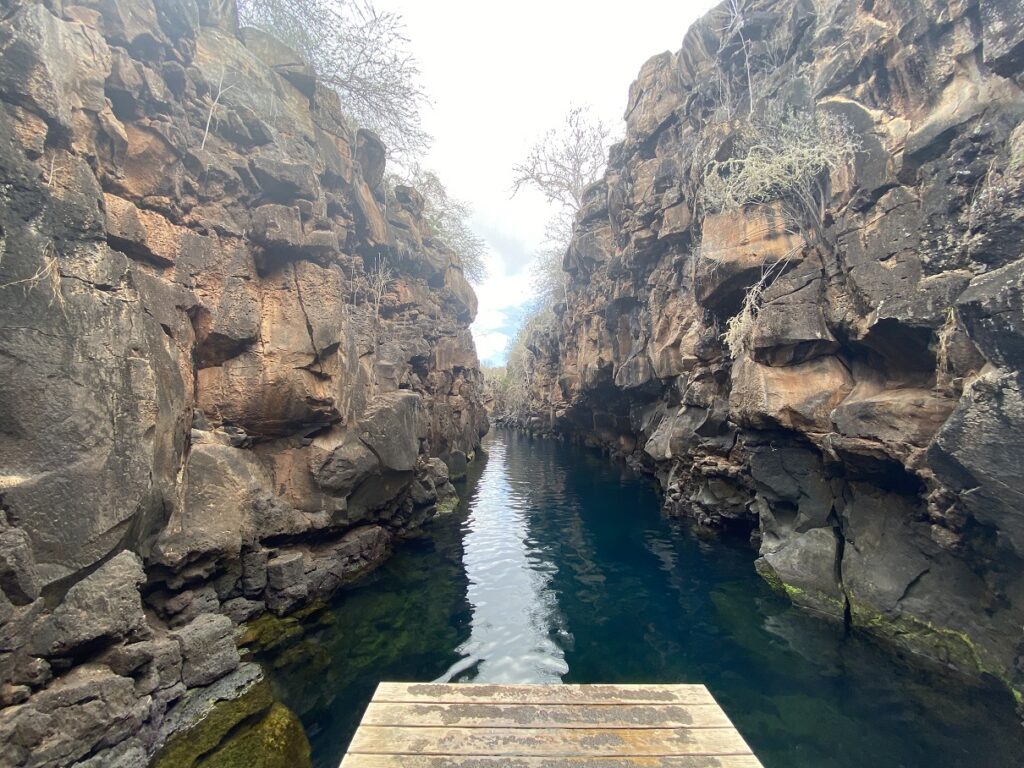
I did two laps in the first pool, saw some fish and got out as it got crowded. We kept our snorkelling gear as our final stop was snorkelling in Franklin Bay. Our snorkelling guide was much better and it was an enjoyable experience for everyone.
Isabela (Puerto Villamil)
After a few days in Santa Cruz, we took a ferry to our third island in Galapagos – Isabela.
Once we got off the ferry in Puerto Villamil, we saw a sea lion chasing a penguin. Galapagos Penguins were on the top of the list of animals to see on this island, but we never thought we would see them right from the pier. Later, we walked to our hostel, which was just over a km away on a nice flat road.
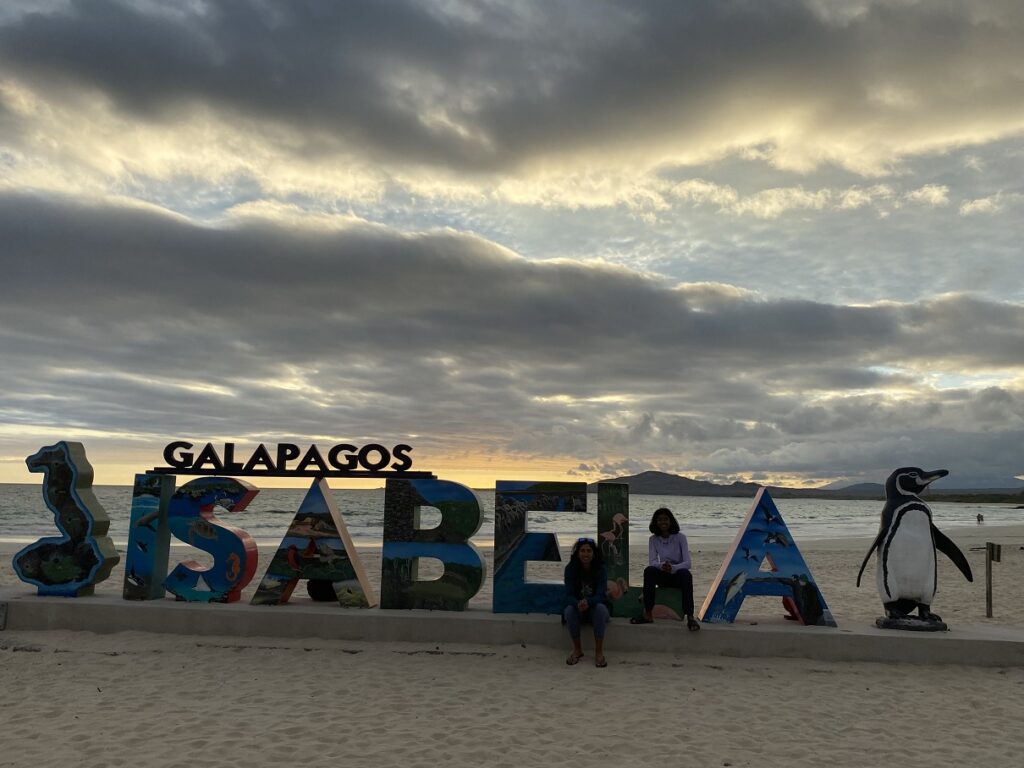
Isabela is the biggest of all the Galapagos islands, with a population of less than 2000. It is said to be the most laid-back of all islands, and it didn’t disappoint.
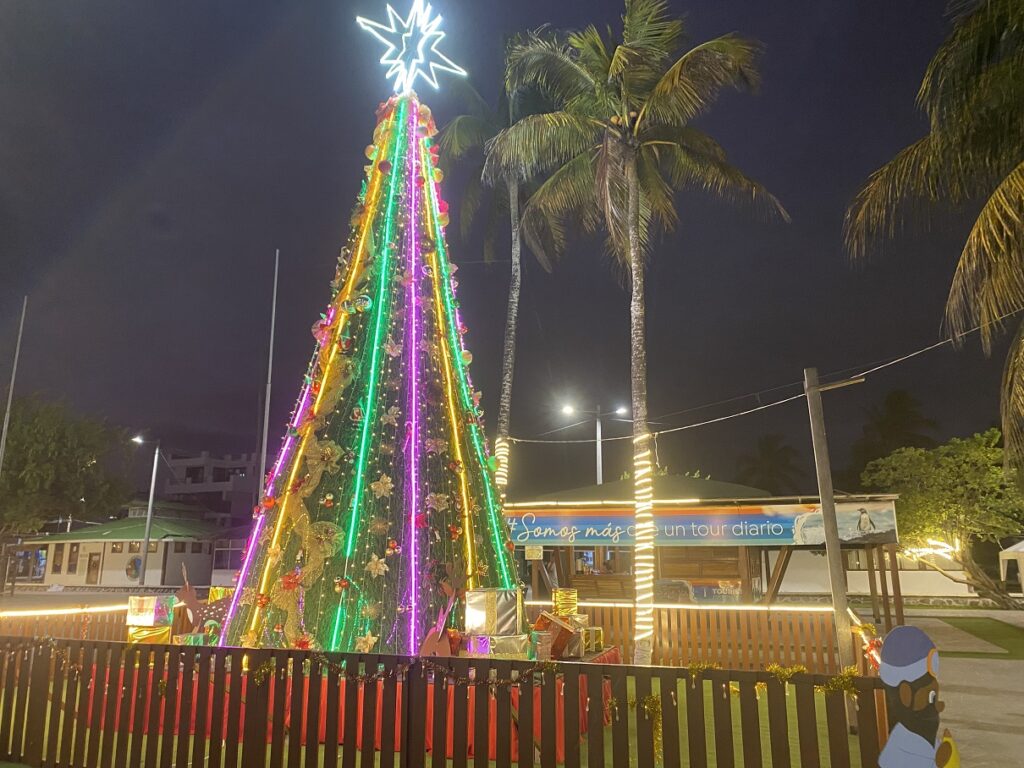
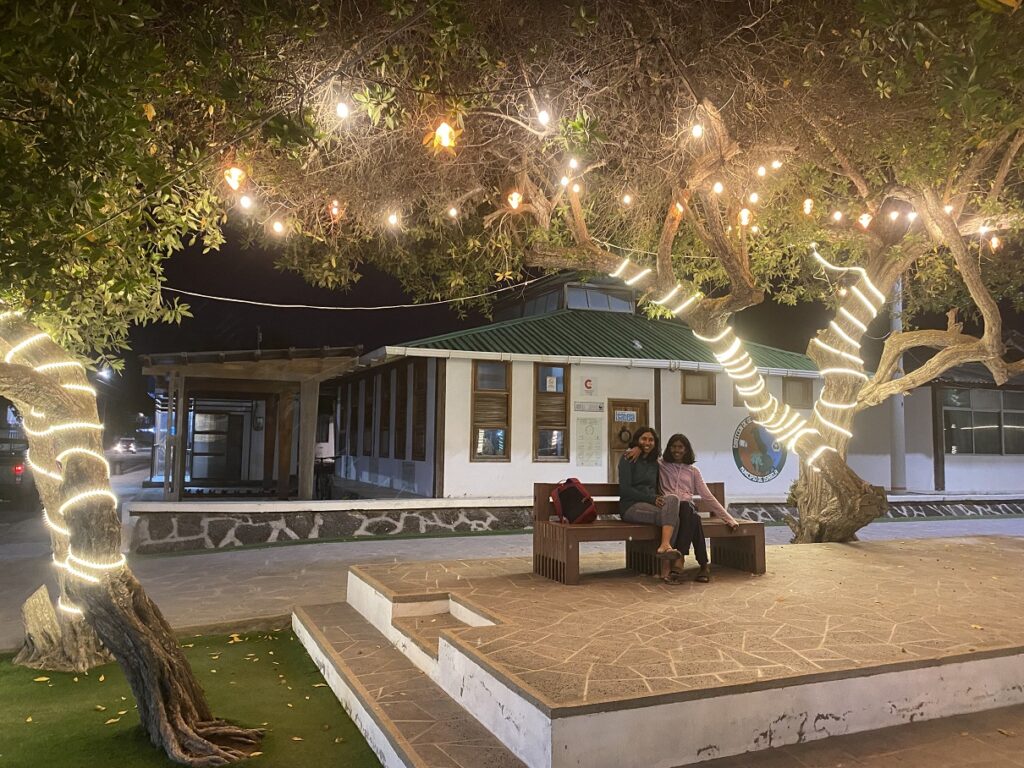
The town has a central square, which was decorated for Christmas. A church, a few stores and restaurants surrounded the square. The sunset was beautiful from the beach, and the long beach made for a pleasant walk in the evening.
Sierra Negra Volcano Hike
The next day, we went on a guided (mandatory) group hike to the Sierra Negra volcano. We were picked up from the central square opposite the church. It was a big group, about 30 people, I think, and we had two naturalist guides. One Spanish and one bilingual (English/Spanish) guide.
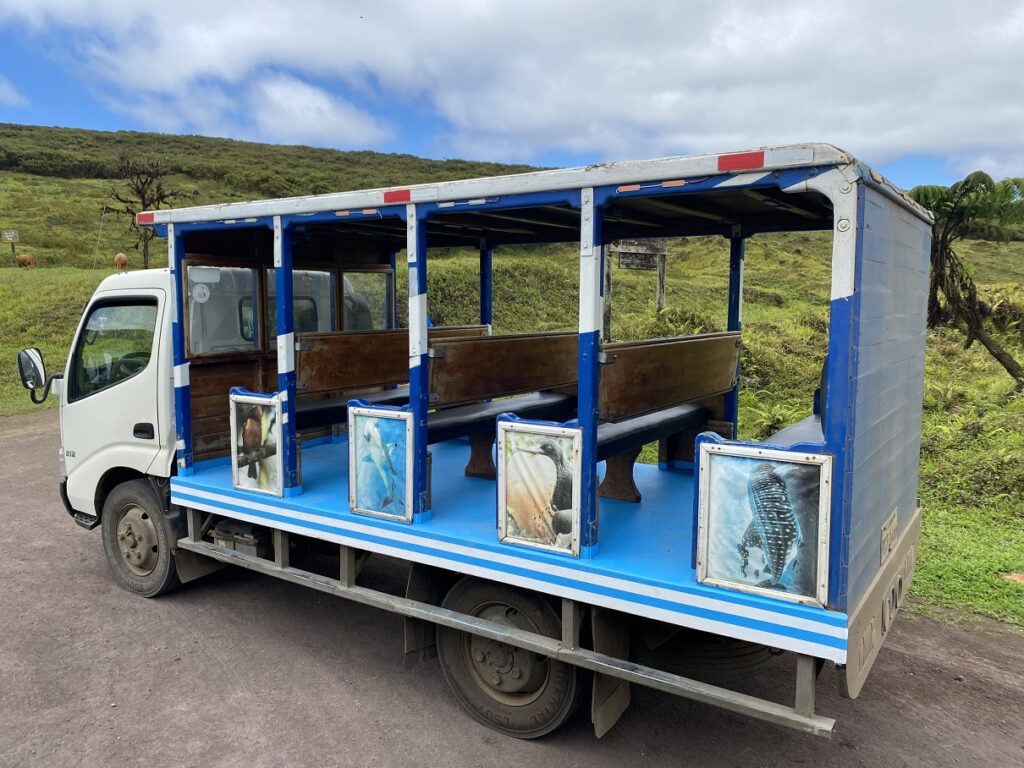
We started our hike around 9 am. There was some elevation gain, but it was gradual, and the hike was not difficult. Our first stop was the viewpoint of the volcanic crater (caldera). It is one of the largest volcanic craters in the world. It was quite different from the Ngorongoro Crater in Tanzania, which was lush green and was a habitat for hundreds of animal species.
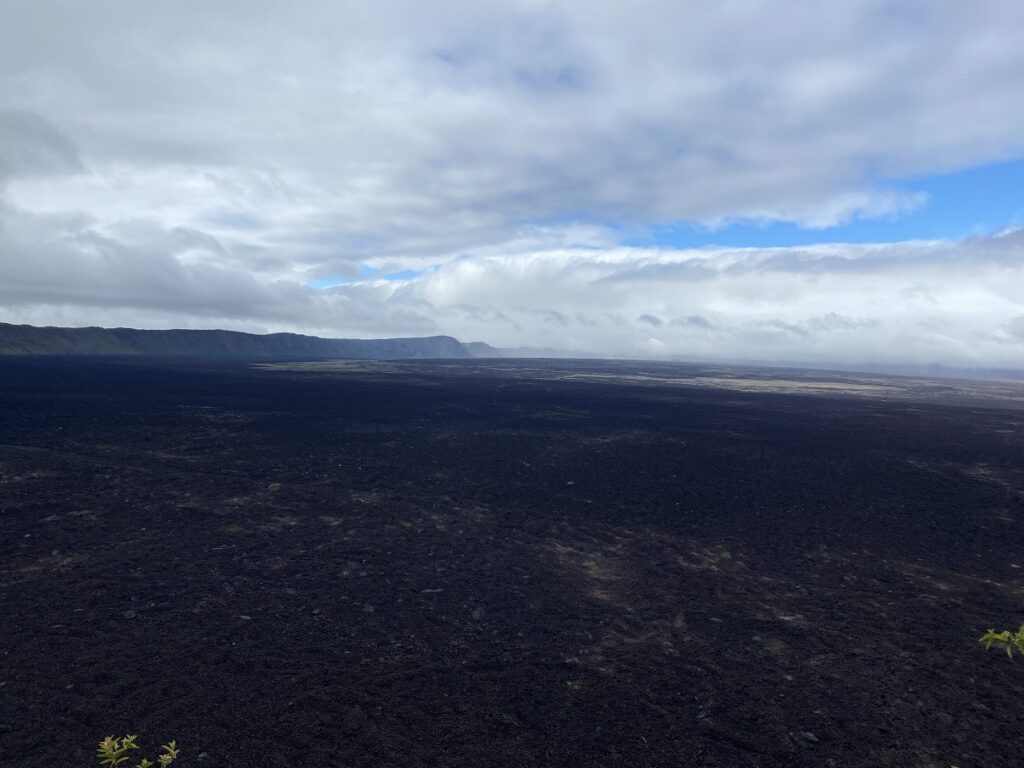
Our guides shared stories of prior eruptions, one as recent as 2018. One photo showed lava flows in the crater. It was surreal. We had clear weather and excellent view of the crater.
After a short break at the viewpoint, we continued our hike to Volcán Chico. On our way, we stopped by the picnic shelter. While the initial section of the hike had some vegetation, the hike to Volcán Chico was through a volcanic landscape. A few individuals stopped at the high point. Others continued on the trail that descended the rocky and exposed terrain.
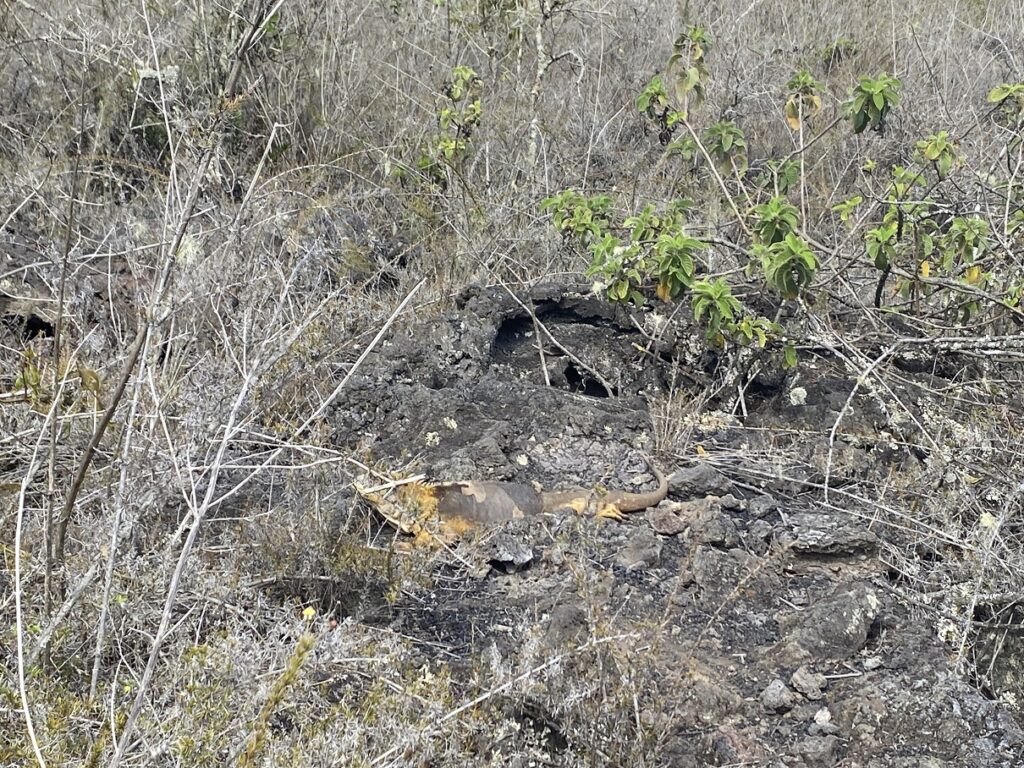
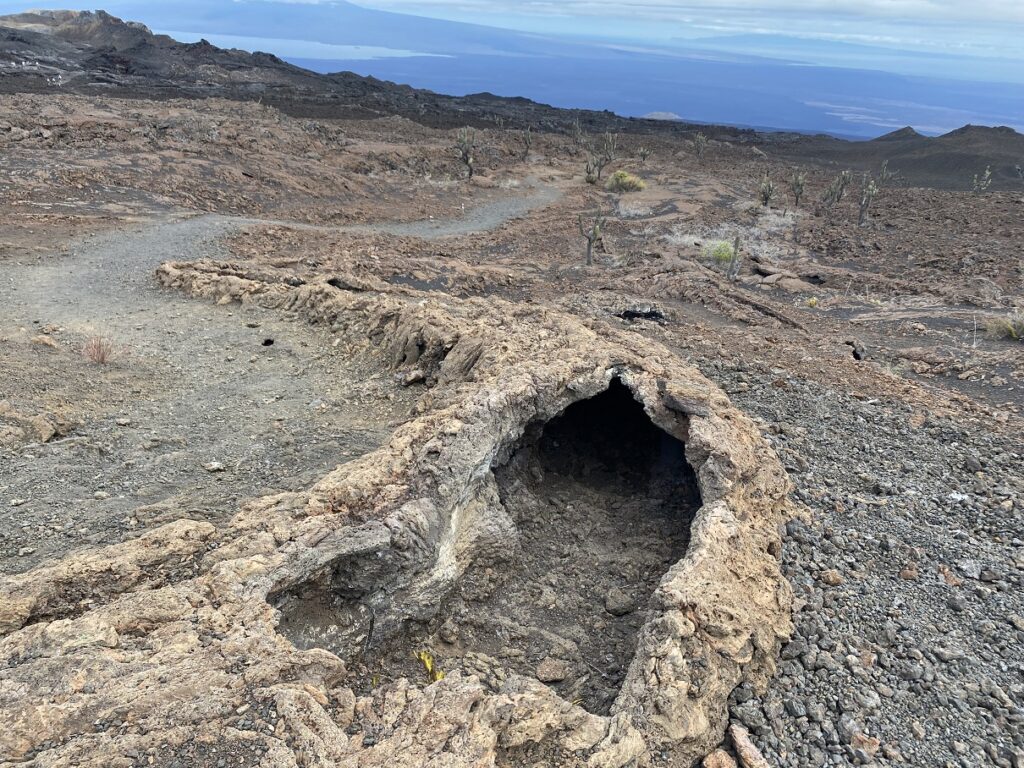
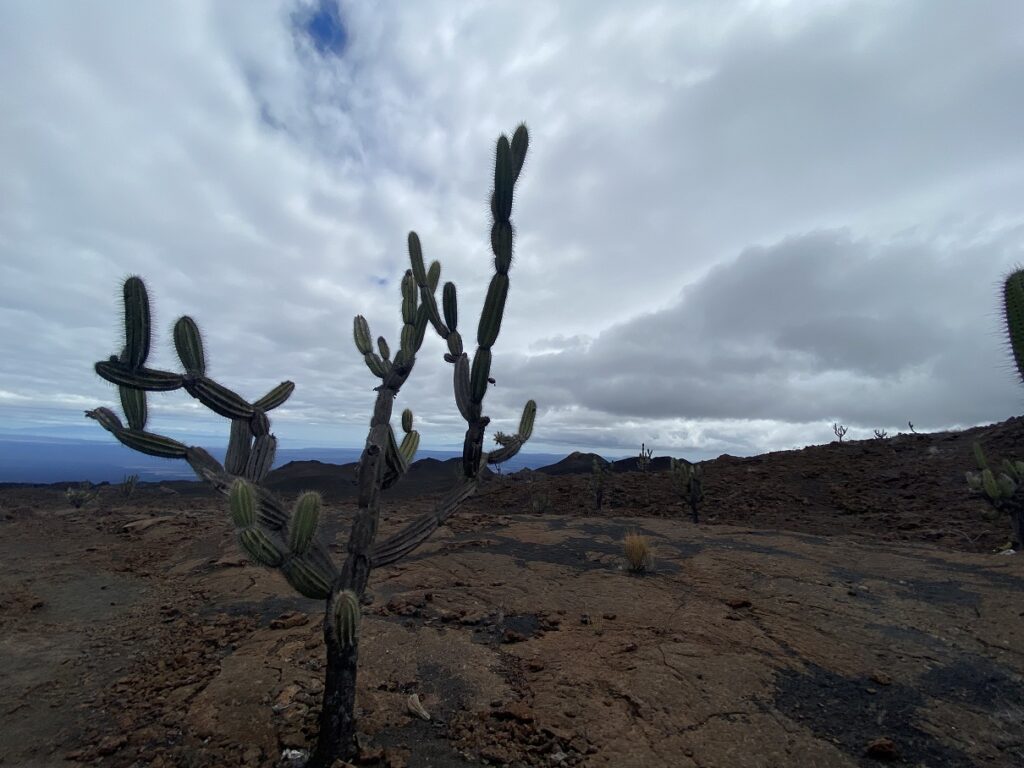
It took us about forty-five minutes to reach the high point of the Volcán Chico, and the views were stunning. The colourful landscape and its rugged nature were very unique and highlighted the incredible diversity of the Isabela island and the Galapagos.
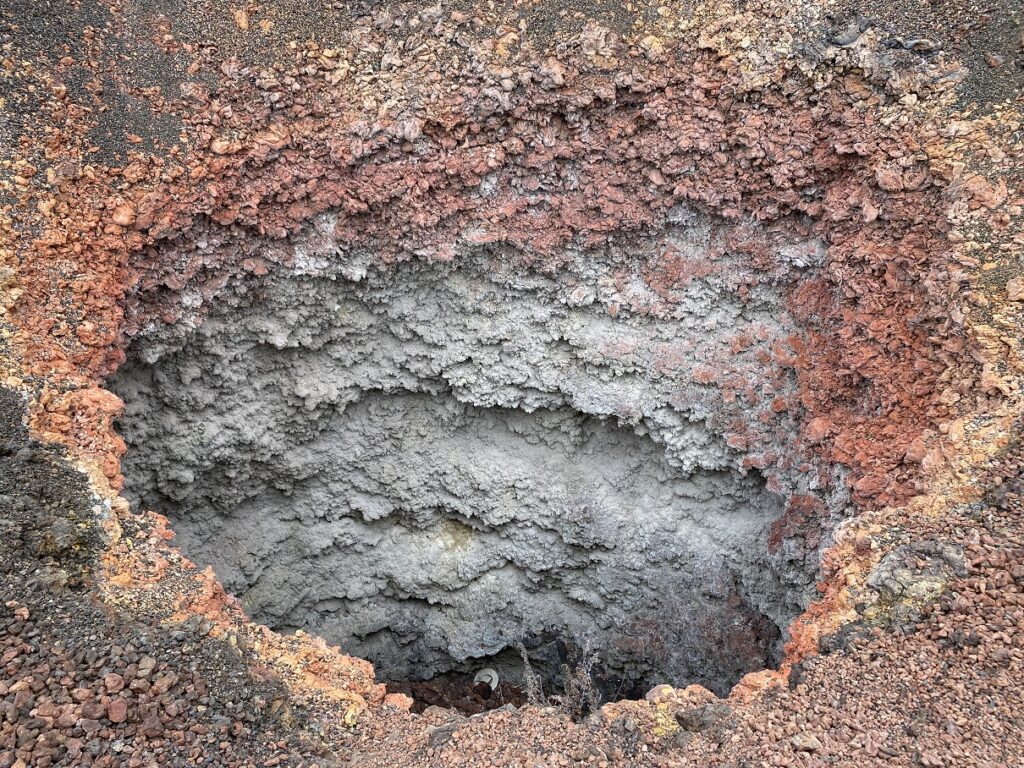
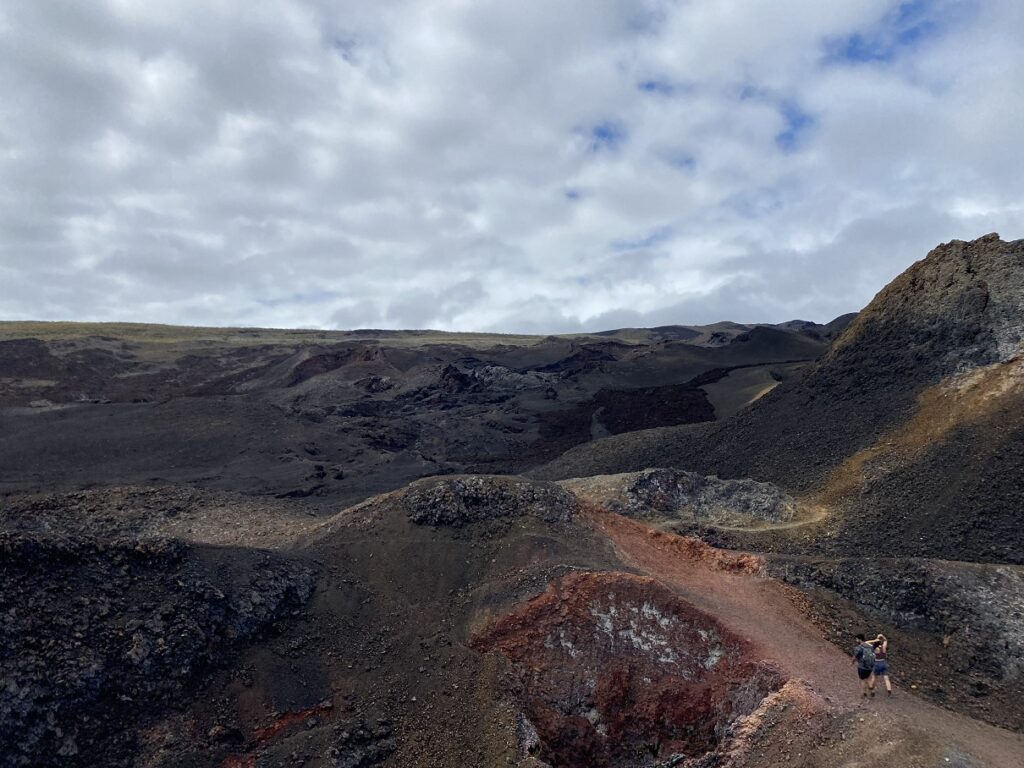
After a short break, we made our way back and stopped at a lookout that we had skipped on our hike in.
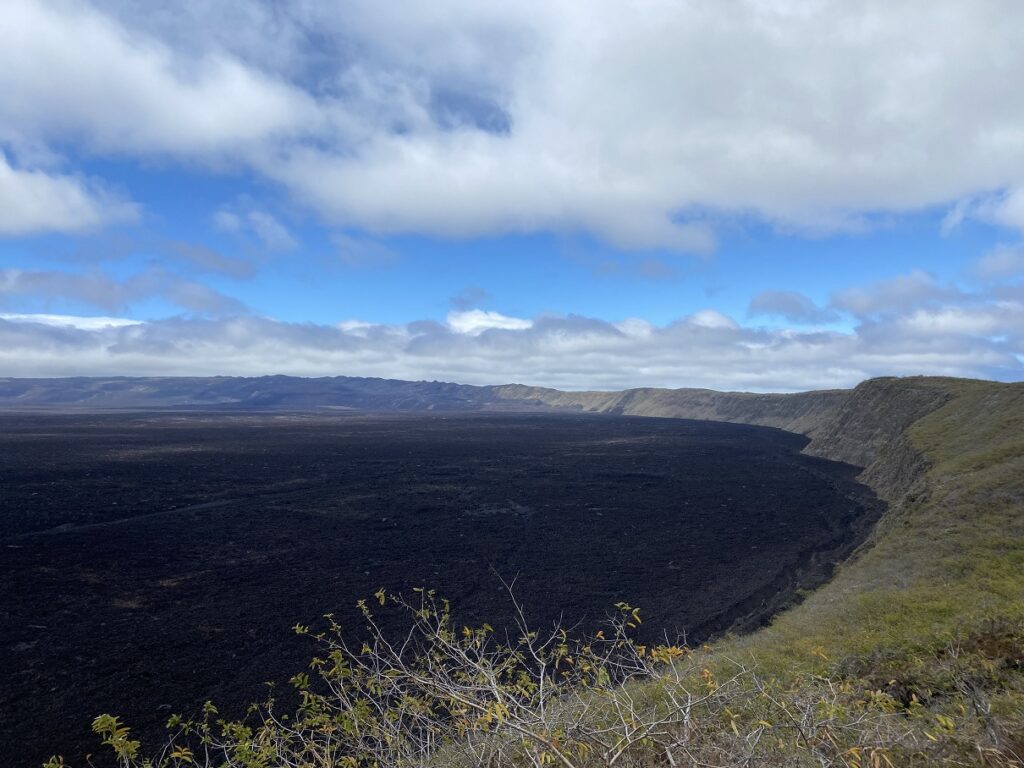
Las Tintoreras
Las Tintoreras is a group of small islets a short boat ride from Puerto Villamil. It was one of the recommended day tours on the island. It was the holiday season after Christmas, and the first couple of tour operators we talked to were fully booked for this tour. Finally, we found an agency with openings and booked an afternoon tour.
As we approached the islets, our guide spotted a penguin. The Galapagos penguin is the only penguin found north of the equator and is one of the smallest of the species.
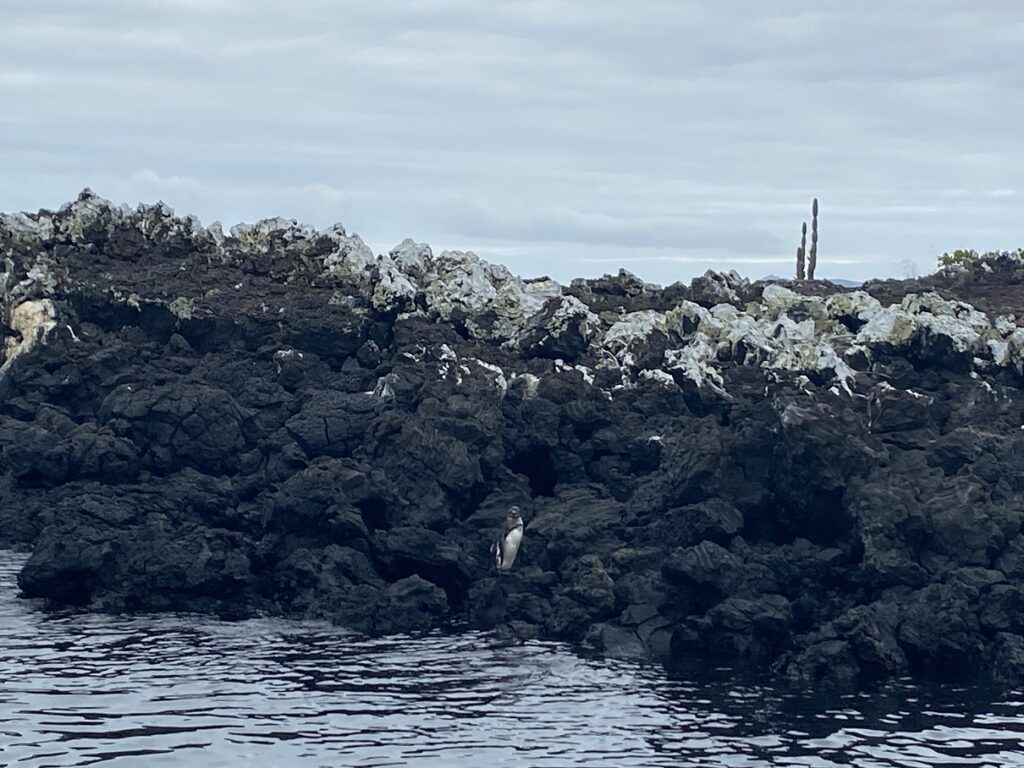
Later, we did a short hike to the Tintoreras channel, where we had a close-up view of the whitetip reef sharks. Along the trail, there were also some marine iguanas.
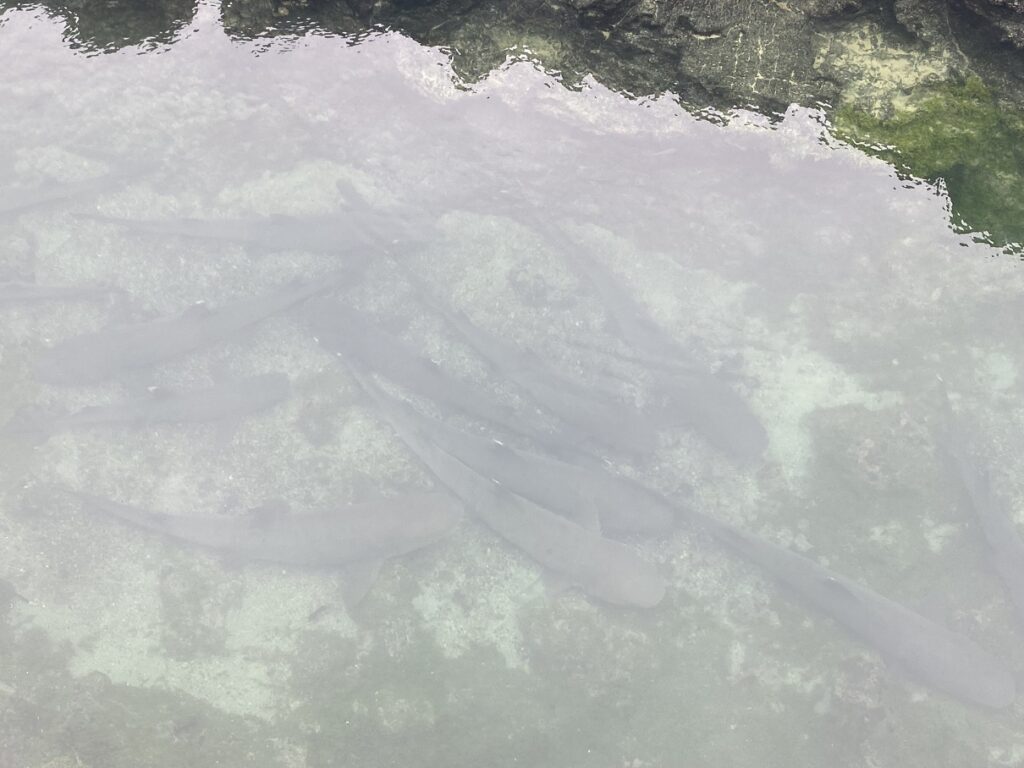
Our final stop on the hike was to a secluded beach that is home to a family of sea lions.
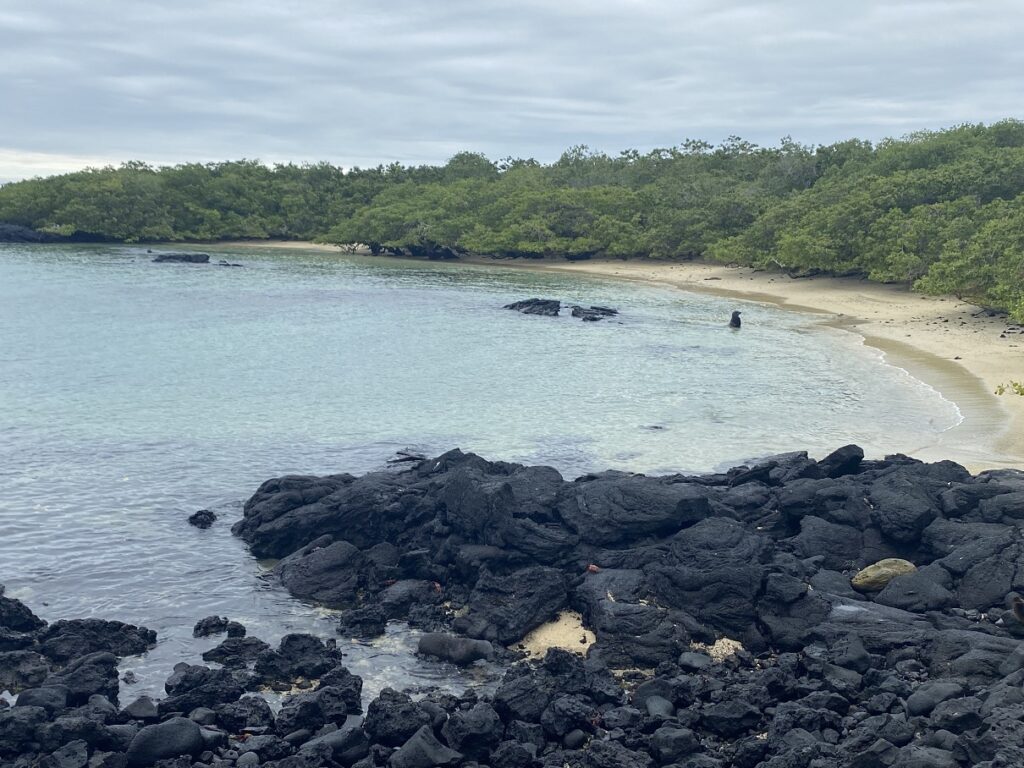
Before heading back to the town, we had an opportunity to snorkel in the channel, but we decided to stay on the boat. I was not feeling well, and Kasturi and Kavya had had enough of snorkelling over the last few days.
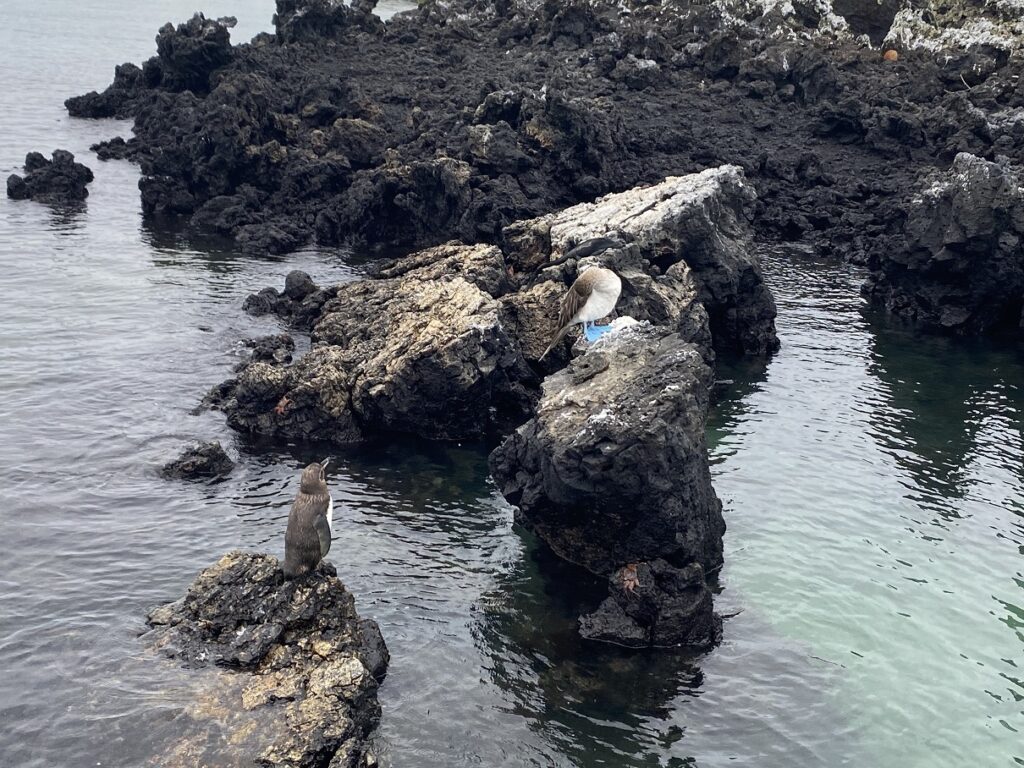
While others from our group snorkelled, the captain took us back to the spot where we had seen the penguin. Now there were more penguins, and some blue-footed booby birds also accompanied them.
The next day, we took a ferry from Isabela back to Santa Cruz and then a taxi, ferry, and bus to Baltra Airport for our flight to Quito. On Dec 29, after twenty-six days in Ecuador, we flew back to Vancouver.
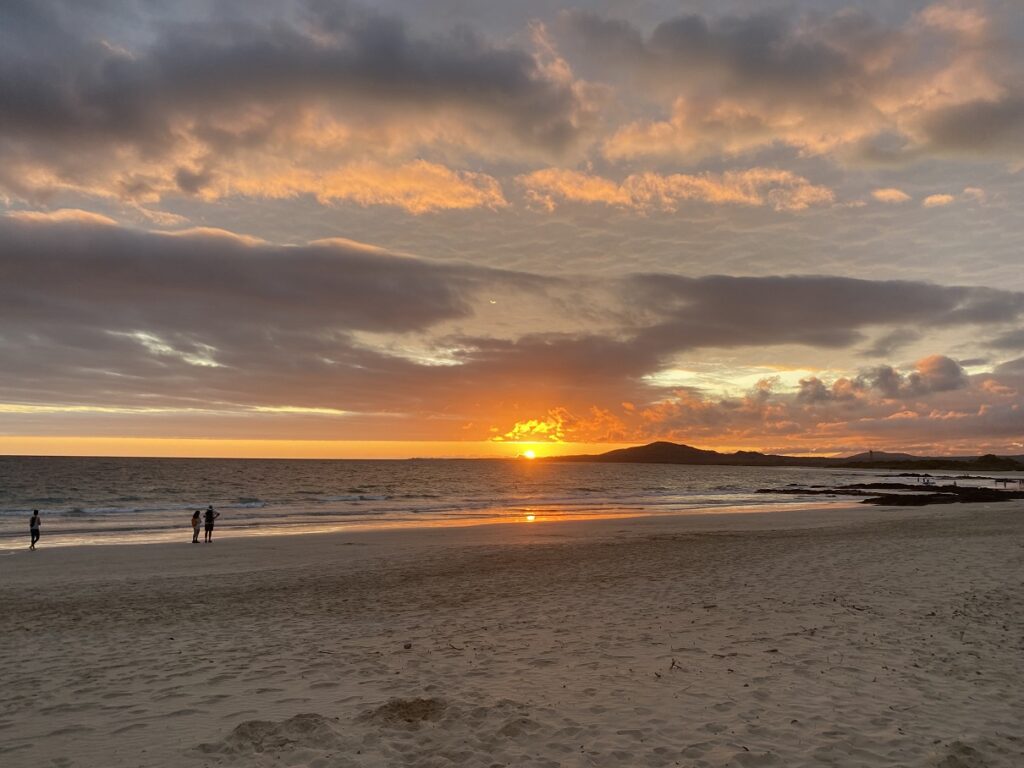
This trip was our longest outside of Canada (other than India), and we had an incredible experience visiting the Andes, Amazon and Galapagos region of Ecuador.
Resources:
Ecuador Galapagos Travel Guide: Happy Gringo | Galapagos Itinerary by Portuguese Traveler | Trip Advisor 10-Day Trip Report
Disclosure: The links I have shared in the post and under the Resources section are not Affiliate Links.
Please subscribe to get regular updates.
I have a weird a hobby of creating elaborated trip itineraries, I do a lot of reserch, even if I dont use them. Im researching the Galapagos now. I just love your humor, honesty and the way you narrate your experience ! It’s sooo boring to read travel blogs, I love how you didnt hide anything. This is the real travelling experience! If you ever want to come try the water of Hawaii, let me know! Keep up the good work!
PS: This is the first time I ever wrote a review in my life, and I scrolled down to write you this. Gonna finish reading!
Bianca – thank you for reading the post and for the kind note. Would love to visit Hawaii… whether I will try the water… I am not sure 😉 Honoured to receive the first review.